I'm in St. Louis for a conference this week. It feels strangely good to be back in the Midwest. I was worried that I hadn't brought nice enough clothing, annoyed that I was all bloated from the long heat wave and high humidity, insecure about my general lack of trendiness and my clothes that I worry scream "Limited Budget!", because that's how I generally feel in DC. Then all the St. Louisans got on the MetroLink to go to the Cardinals game, with their comfort-food Midwestern bodies (not necessarily fat, just normal-looking, not anorexic like on the East Coast) and their lack of being overly concerned about appearance. Then I felt better. Like I was home, back in a place that's much simpler.
The conference just started today, so I had much of the weekend to spend with old friends. Saturday night I got together with a friend from college who just married one of my Chicago friends - a fun merging of two worlds. Among the things we did that night was a trip to Ted Drewes, the best frozen custard place around. It's so good, Alton Brown visited it a few years ago during his "Feasting on Asphalt" series.
Sunday, we took a trip to Columbia, the ol' college town and home of many memories (some of which I'd like to forget), to walk around campus and visit with some other college friends who have had two children and conceived a third in the five years since I was there last. Their kids are great, and they are great parents. If I could be absolutely guaranteed that my children would be like that, I might give more consideration to becoming a parent myself.
Anyway, even after seeing the big changes on campus, around the downtown area, and in my friends' lives, it's nice to know that some things are still the same. I got quite nostalgic, feeling like I was back home where I belonged. My college friends and I joke around in ways that people on the East Coast don't seem comfortable with. Something about Midwestern sensibilities and the openness that comes with growing up in communities where people really get to know each other and talk about the things that really matter. It's too bad that Missouri is "fly-over country" to people on the East Coast, because I think the social and political atmosphere in this country would be different if Midwesterners weren't just seen as hoosiers, rednecks, farmers, or any of the other stereotypes that prevail. Being out here has just further solidified my need to get away from the Beltway. I never thought I'd get burned out on Washington DC, but after two years, it's happened.
The funny thing is, as much as I really love Missouri, I can't see myself moving back here. Why? There are lots of opportunities for outdoor recreation. There are Whole Foods, Trader Joe's, and plenty of other organic/natural food options. According to my friend, there are few farmers' markets, which is puzzling, but not really limiting. There are young people who are professionals, smart, active, interesting. There is art, music, good food, plenty of good beer and wine - all things I enjoy. It's just not in your face like it is in major metropolitan areas. You have to look a little harder, and you have to drive everywhere. Perhaps my biggest concern is that I am a bit of an eco-snob. Yes, I'll admit it. People in Missouri are not necessarily eco-snobs. That kind of culture just isn't prevalent here. I was the silly hippie in my college days, and I'd be the silly hippie again if I moved back. For that reason alone, I was never fully content out here, and I just can't do that again. So, Missouri, I love you dearly and I promise to come visit more often. But I'm sorry, I just can't stay.
Monday, July 19, 2010
Thursday, July 08, 2010
Missing the river
I just finished writing a paper for my class about a natural place that's special to me. I chose the Katy Trail/Missouri River in Missouri. It made me really miss the river. I haven't been back to Missouri since a brief trip in 2005, and I haven't really connected with the place since my week-long adventure in 2003. When I was in college in Missouri, I used to ride my bike on the trail along the river, seeking out solace and answers from the crunch of the gravel under tire and the slow whoosh of the muddy water echoing off the bluffs. I also wrote for a local newspaper about the management issues associated with the river and the threatened and endangered species that biologists were trying to protect.
This fall, it will be ten years since that semester at the newspaper. Knowing what I know now about watersheds, natural resource management and policy making, I wish I could go back and redo that semester. Rewrite those articles and write some new ones as well. Investigate more. Talk to more people. I was a budding environmentalist those ten years ago, and all I knew was that I wanted to protect the animals, but those darn corn growers and their barges got in the way. I didn't understand just how complex the issue was, and I didn't know what questions to ask. I didn't know how to be a journalist.
Writing this paper reminded me of how special that river is, and how much I enjoy writing when I can be a little creative with it. Government reports are not the least bit creative, I can tell you that much. I've been doubting my writing skills lately, and in fact had forgotten how much I enjoyed writing until now. Rachel Carson was a writer and a scientist, and she recognized that she had a special role to fill by writing about environmental issues in a passionate way that moved people to take a stand against pesticides and pollution. I still haven't found my role, still haven't figured out how I can have an impact. I just have to remember the river and hope that if I can keep my boat upright, eventually it will take me where I'm supposed to end up.
This fall, it will be ten years since that semester at the newspaper. Knowing what I know now about watersheds, natural resource management and policy making, I wish I could go back and redo that semester. Rewrite those articles and write some new ones as well. Investigate more. Talk to more people. I was a budding environmentalist those ten years ago, and all I knew was that I wanted to protect the animals, but those darn corn growers and their barges got in the way. I didn't understand just how complex the issue was, and I didn't know what questions to ask. I didn't know how to be a journalist.
Writing this paper reminded me of how special that river is, and how much I enjoy writing when I can be a little creative with it. Government reports are not the least bit creative, I can tell you that much. I've been doubting my writing skills lately, and in fact had forgotten how much I enjoyed writing until now. Rachel Carson was a writer and a scientist, and she recognized that she had a special role to fill by writing about environmental issues in a passionate way that moved people to take a stand against pesticides and pollution. I still haven't found my role, still haven't figured out how I can have an impact. I just have to remember the river and hope that if I can keep my boat upright, eventually it will take me where I'm supposed to end up.


Monday, July 05, 2010
Savory summer
I resurrected my pepper plant, which I planted last year and harvested one small red pepper that was promptly mixed in a stir-fry. I kept it alive all winter, unwilling to trash a plant that seemed to be hanging in there. This spring, I added some organic fertilizer, gave it lots of love, and placed it on my fire escape to capture the sun's rays and hopefully a passing pollinator or two. It worked - I now have two peppers bulging out from the tall plant stalk. Every day I cheer it on, hoping that even in this ridiculous heat wave, I can have fresh, homegrown peppers in my fajitas instead of the $3.50-each store-bought kinds. I wish I had planted more veggies in my container garden this year. I got kind of discouraged after last year's flop, but maybe I'll try again for some cooler-weather goodies.
Speaking of fajitas, I marinated some chicken breasts in Whole Foods' brand Santa Fe marinade for 12 hours, then pan-cooked them whole. What a difference it makes. I cannot remember ever making such flavorful, juicy chicken. The garlic and herb flavor is tasty too - the last batch of chicken I made with this flavor turned into chicken salad with grapes and walnuts. I used to be against marinades but they just make life so much easier. And tastier.
Some other recent concoctions:
green bean and carrot salad with rice vinegar, toasted sesame oil, dried red pepper flakes, and salt
savory egg noodle kugel with shredded zucchini, mushrooms, and lentils (next time, with ricotta too)
smoothies with frozen spinach
sugar snap peas from the farmers market (perfect just as they are, no concocting needed)
It's hard to find inspiration to cook in this ridiculous heat, but as long as I'm going to be cooped up inside with the A/C blasting, may as well get creative. We'll see what this week's bounty brings.
Speaking of fajitas, I marinated some chicken breasts in Whole Foods' brand Santa Fe marinade for 12 hours, then pan-cooked them whole. What a difference it makes. I cannot remember ever making such flavorful, juicy chicken. The garlic and herb flavor is tasty too - the last batch of chicken I made with this flavor turned into chicken salad with grapes and walnuts. I used to be against marinades but they just make life so much easier. And tastier.
Some other recent concoctions:
green bean and carrot salad with rice vinegar, toasted sesame oil, dried red pepper flakes, and salt
savory egg noodle kugel with shredded zucchini, mushrooms, and lentils (next time, with ricotta too)
smoothies with frozen spinach
sugar snap peas from the farmers market (perfect just as they are, no concocting needed)
It's hard to find inspiration to cook in this ridiculous heat, but as long as I'm going to be cooped up inside with the A/C blasting, may as well get creative. We'll see what this week's bounty brings.
Discoveries
A few weeks ago, I joined a large portion of my family in Hilton Head, South Carolina, for some beachy time and good eatin'. So much good eatin'. After five days I felt like the snake that ate the alligator, except I didn't split in half like the snake did. To work off some of the food we ate, my brother, sister-in-law, and I took a couple of afternoon trips to check out parts of the island that existed before the golf courses and touristy resorts moved in.
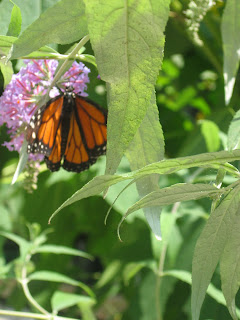 On one afternoon, we went to the Coastal Discovery Museum at Honey Horn. The house on the property showcases a history of the island, both natural and human, and included an exhibit of photography from around the Carolinas. The house sits along some salt marshes, and visitors can wander along a trail through the property that winds past some boardwalks overlooking the salt marsh, small gardens, some bee hives, an old barn, and even a native historical site that is being rebuilt. It was hot and muggy and totally made me miss North Carolina. We were there at low tide, and in the flat areas along the marsh, fiddler crabs scurried everywhere like roaches, the males waving their one giant claw to woo the ladies. We saw some herons wandering through the grasses and heard other birds chirping everywhere. A green anole scurried along a tree near us, and the butterfly garden was aflutter.
 The best part for me though was when my sister-in-law and I saw a bluebird fly onto a low branch nearby. Neither of us had seen a bluebird in person before, and even though I'm the nature nerd of the group, we were both equally awed. I am always wowed by nature, but there's something so special about seeing nature through the eyes of someone else, especially if they're not the type to get excited about things like that.
The next day, we went to the Pinckney Island National Wildlife Refuge. Again, hot and muggy, even early in the morning. We were hoping to see some gators, but no luck. We did see about a gajillion birds at Ibis Pond. I couldn't get any good close-ups because I realized after the fact that the super zoom on my camera only works when I turn on the digital display panel, which I don't use because it soaks up battery power. I brought my binoculars, and it seemed like my brother and sister-in-law really enjoyed getting to see the birds way up close through them. Unless they get into wildlife watching or hang out with me more often, they might not get to do that very often. I recognize that not everyone feels the need to experience nature as much as I do, but I hope that the experiences they had those two days made a difference to them. It gave me a new perspective on my volunteer work at the zoo as well, where most visitors will just walk through the exhibit without much afterthought, but a few might take away something meaningful from what they learned there.
Last weekend I hiked through Little Bennett Regional Park in Maryland, where I discovered some other new things, like the crayfish in the stream that eyed me and then scurried under a rock when I bent down to wash my hands after lunch. And the white-tailed deer that snorted and whined as it high-tailed it away from the trail I was walking on. And the giant red-headed woodpecker that startled me when I was too busy examining the map. I caught a quick glimpse as it flew by, but I didn't have enough time to see enough of the bird to identify it. Shortly afterward, I realized that the woods in that spot was particularly melodic and lamented the fact that I had spent too much time looking and not enough time listening to the sounds of the forest, so I sat on a bridge for ten minutes, just enjoying the sounds. Which unfortunately included road noise as well.
 On one afternoon, we went to the Coastal Discovery Museum at Honey Horn. The house on the property showcases a history of the island, both natural and human, and included an exhibit of photography from around the Carolinas. The house sits along some salt marshes, and visitors can wander along a trail through the property that winds past some boardwalks overlooking the salt marsh, small gardens, some bee hives, an old barn, and even a native historical site that is being rebuilt. It was hot and muggy and totally made me miss North Carolina. We were there at low tide, and in the flat areas along the marsh, fiddler crabs scurried everywhere like roaches, the males waving their one giant claw to woo the ladies. We saw some herons wandering through the grasses and heard other birds chirping everywhere. A green anole scurried along a tree near us, and the butterfly garden was aflutter.
 The best part for me though was when my sister-in-law and I saw a bluebird fly onto a low branch nearby. Neither of us had seen a bluebird in person before, and even though I'm the nature nerd of the group, we were both equally awed. I am always wowed by nature, but there's something so special about seeing nature through the eyes of someone else, especially if they're not the type to get excited about things like that.
 The next day, we went to the Pinckney Island National Wildlife Refuge. Again, hot and muggy, even early in the morning. We were hoping to see some gators, but no luck. We did see about a gajillion birds at Ibis Pond. I couldn't get any good close-ups because I realized after the fact that the super zoom on my camera only works when I turn on the digital display panel, which I don't use because it soaks up battery power. I brought my binoculars, and it seemed like my brother and sister-in-law really enjoyed getting to see the birds way up close through them. Unless they get into wildlife watching or hang out with me more often, they might not get to do that very often. I recognize that not everyone feels the need to experience nature as much as I do, but I hope that the experiences they had those two days made a difference to them. It gave me a new perspective on my volunteer work at the zoo as well, where most visitors will just walk through the exhibit without much afterthought, but a few might take away something meaningful from what they learned there.
Last weekend I hiked through Little Bennett Regional Park in Maryland, where I discovered some other new things, like the crayfish in the stream that eyed me and then scurried under a rock when I bent down to wash my hands after lunch. And the white-tailed deer that snorted and whined as it high-tailed it away from the trail I was walking on. And the giant red-headed woodpecker that startled me when I was too busy examining the map. I caught a quick glimpse as it flew by, but I didn't have enough time to see enough of the bird to identify it. Shortly afterward, I realized that the woods in that spot was particularly melodic and lamented the fact that I had spent too much time looking and not enough time listening to the sounds of the forest, so I sat on a bridge for ten minutes, just enjoying the sounds. Which unfortunately included road noise as well.
Sunday, June 27, 2010
Summer
It's hot. At or above 90 degrees just about every day for the past three weeks. Weather this hot, humid, and hazy is like the winter snowstorms, except it doesn't shut everything down. You can't really go outside for long periods of time without running for a temperature-controlled environment. In the winter, you know you're supposed to sit still, conserve your energy, and crochet or read or snuggle, so it's not so bad to stay inside. In the summer, you know you're supposed to go out and play as much as possible, because the days are long and everything is green and blooming, which makes it even more frustrating that the weather is unbearable. I can't even stand being in my exhibit at the zoo because even though it's slightly cooler than the weather outside, it's still just as humid (or worse), and therefore not really an escape from the heat. Instead, I'm stuck at home, daydreaming of the lush, cool, green forests and scenic shores of the Pacific Northwest. I've never been there, but I imagine that they're fantastic.
I've been daydreaming about Oregon lately while exploring professional opportunities there, but I also just started taking a course online through Oregon State University, so I'm in a sort of mental classroom out there. Yes, more school. When I finished grad school, the folks in the office where I did my work-study swore that I'd be back in school in a few years. At the time, I said oh hell no! but I'm eating my words now. I'm in the program that I should have been in all those years ago, when I opted for a degree in an "easier" field instead - I'm going for my Bachelor of Science in Natural Resources degree with a focus on fish and wildlife conservation. Two weeks into my first class and already I'm loving it. Online classes are great because you get to meet people in all different stages of their lives from all over the country. And you can do the work in your own time. So as long as I have to be stuck inside when it's hot and humid out, at least my coursework will keep me busy and engaged.
And come August and September, when all the back-to-school excitement starts up, I get to be a part of it again. Maybe I'm not buying things for my dorm room or eating in the dining halls, but I get to crack open my books and learn some new things.
I've been daydreaming about Oregon lately while exploring professional opportunities there, but I also just started taking a course online through Oregon State University, so I'm in a sort of mental classroom out there. Yes, more school. When I finished grad school, the folks in the office where I did my work-study swore that I'd be back in school in a few years. At the time, I said oh hell no! but I'm eating my words now. I'm in the program that I should have been in all those years ago, when I opted for a degree in an "easier" field instead - I'm going for my Bachelor of Science in Natural Resources degree with a focus on fish and wildlife conservation. Two weeks into my first class and already I'm loving it. Online classes are great because you get to meet people in all different stages of their lives from all over the country. And you can do the work in your own time. So as long as I have to be stuck inside when it's hot and humid out, at least my coursework will keep me busy and engaged.
And come August and September, when all the back-to-school excitement starts up, I get to be a part of it again. Maybe I'm not buying things for my dorm room or eating in the dining halls, but I get to crack open my books and learn some new things.
Sunday, June 06, 2010
Otherworldly
Over Memorial Day weekend, I flew out to Salt Lake City, and rode down to Moab, Utah, with some friends for a weekend of tenting in the desert and hiking through the Mars-like terrain of Canyonlands and Arches National Parks and other scenic lands managed by the Bureau of Land Management.
I love camping. I wish I could spend my days sleeping in a tent, cooking food over the fire, and hiking around the area. I can't imagine much that would make me happier. The smell of campfire and sunscreen thrills me to no end. I think I'm secretly a holdover from our caveman days. However, there are some modern conveniences that I could do without during camping trips, but I don't think I'd want to:


I love camping. I wish I could spend my days sleeping in a tent, cooking food over the fire, and hiking around the area. I can't imagine much that would make me happier. The smell of campfire and sunscreen thrills me to no end. I think I'm secretly a holdover from our caveman days. However, there are some modern conveniences that I could do without during camping trips, but I don't think I'd want to:
- S'mores, made with dark chocolate. A must-have.
- I usually sleep with a Thermarest, which does the job but is rather narrow and not nearly cushy enough, so if I sleep on my back, my arms fall off the pad, and if I sleep on my side, my hips get sore. That's part of the fun of camping though, and it feels tough and rugged. For this trip, my friend supplied me with a real blow-up air mattress that covered the entire floor of my two-person tent. At first, I thought, "lame! real outdoorswomen do NOT sleep on air mattresses." But let me tell you, it was awesome. I am a changed woman. For car camping, I'm going with the air mattress all the way. Outdoorsy cred be damned.
- Crocs. With socks. For the record, I think Tevas/Birkenstocks and socks look just fine too.
- Aluminum foil. It makes the perfect packet for a wide array of foodstuffs to be cooked on or in a fire.
- Here's where I admit that I am a foodie. Camping should not keep you from eating a tasty, well-prepared meal. That includes salmon fillets cooked on said foil over the fire, foil packets stuffed with chopped veggies and seasonings, dutch oven cobblers, chilis, and pancakes. Sure the usual burgers, hot dogs, bacon and eggs are tasty, especially after a long day on the trails or a cool night in the tent, but I kind of prefer fresh food to go with my fresh air. I recognize that this may not be feasible for backpacking trips, but it is indeed possible to eat chicken, snow peas, and rice with pesto sauce cooked over a camp stove in the Yellowstone backcountry. All it takes is a little preparation beforehand (cook and slice the chicken ahead of time, make and package the pesto, throw in some boil-in-bag rice, and pick snowpeas from the garden).
- I'm not a big drinker, but wow, a cold beer tastes really good after a long day on the trail. I also really don't like whiskey, but a sip or two right after a hard hike is strangely refreshing. It washes away all the nasty sludge that accumulates on your tongue when you're huffing and puffing along switchbacks that wind straight up the side of a cliff.
- Good friends with absurd/wacky/hilarious stories and some outlaw country music. No camping trip is the same without them. Many thanks to my Salt Lake crew for the awesome weekend!


Saturday, May 22, 2010
Weekend pursuits
Some good things to do on a warm spring weekend:
- Visit the Smithsonian Environmental Research Center in Edgewater, Md. Take a guided or self-guided canoe trip around the bay, attend a seminar, go for a hike or a bird-watching trip, or talk to one of the scientists about the work they're engaged in to rehabilitate the Chesapeake Bay. Try to catch the yearly open house for additional fun and activities, including live music, a tutorial on raising bees, BBQ, a tour of the bay on a research boat, and an up-close look at a horseshoe crab.
- Go for a bike ride on the Washington & Old Dominion trail. Park at a lot on the trail and ride west, farther than you think you should go, then coast downhill the whole way back.
- Make southwestern turkey meatloaf with 2 lbs ground turkey thighs, breadcrumbs, 2 eggs, cumin, garlic, chili powder, oregano, chopped red pepper and red onion, corn, fresh cilantro, and tomatillo salsa. Top with avocado. Eat with a side of roasted butternut squash and mixed wild rice. Then share a cupcake with a friend and watch an uplifting movie.
- Drink some Goose Island 312 Urban Wheat Beer and read an entire issue of Outside magazine in front of an open window while listening to the cars slosh in the rain on the main street below.
- Engage in some serious snuggles with a very snuggly cat. The ideal time is 5:30am, when said cat is ready to get up but you are not.
- Go to REI during a sale and spend way too much time shopping and much more money than you had intended. Then dream about all the cool things you'll do with the stuff you just bought.
Saturday, May 01, 2010
Gulf Coast Environmental Disaster
It's really tempting to get on my high horse right now and laugh in the faces of all those "Drill, baby, drill" enthusiasts, but those feelings are far eclipsed by feelings of sadness for all of the wildlife that will be impacted by this awful disaster. The Burdr website has a great post about all of the birds and bird areas that are at risk from the oil spill. I'll post other great resources of information as I come across them. Let's hope that out of this tragedy comes a new approach to energy development and usage in this country and renewed efforts to protect the fragile Gulf Coast ecosystem.
Sunday, April 25, 2010
Simple things
It's been lovely in DC lately: sunny, warm, dry, but full of pollen - an outdoorsy girl's worst nightmare. I've been itching to play outside for weeks now, but between my allergic reactions to all the tree sex and the side effects of my allergy medication, I've been miserable. And then, a mixed blessing: the weather forecast has called for a rainy weekend, which would wash away the pollen (yay!) but be, alas, rainy. I decided to brave it anyway and headed down to Prince William Forest Park in Virginia. It's National Parks Week, so I didn't even have to pay the $3 to get into the park. The last time I hiked through the park was last July - I was training for my first backpacking trip and couldn't find anyone to come with me, so it was also my first time hiking alone. And by alone, I mean alone. Judging by all the spider webs strung across the trail, no one had been there for a while. Aside from being constantly worried about getting spiders all over me (although I like to look at spiders, I'm not a big fan of them crawling on me), it was a ton of fun, and so gorgeous.
That time, I hiked a good portion of the South Valley Trail, so yesterday I headed out on the North Valley Trail. The only problem with the park is that very few of the trails are loops, so you have to think strategically about where you park so you can hike out and back. Other than that, I love this park, mostly for its simplicity. On a damp spring day, everything smells like wood, which there's lots of. It reminded me of being in the woods at Camp Windego in Wisconsin, the overnight girl scout camp I attended for two weeks each summer from ages eight to thirteen. There aren't any mountains to hike up, no challenging rock scrambles, no tricky creek or river crossings, and no fancy valley overlooks. The South Valley Trail has some steeper hills because most of it is a little more upland, but the North Valley Trail mostly just meanders through the woods alongside Quantico Creek. About midway through on the North Valley Trail, a steep drop draws the boundary between the Piedmont and the Coastal Plain, and below the boundary, the simple and undramatic Quantico Falls is little more than a shallow creek running over some hard volcanic boulders.
The great vistas of Shenandoah and the Smokies are breathtaking, it's fun to challenge yourself on steep hills and serious switchbacks, and the parks in Virginia and Maryland are hotbeds of unique geologic formations, but sometimes, it's just nice to wander through the forest. I didn't see any deer or beavers, or even any amphibians (too cool out) or birds (they were mostly high up in the tree canopy, though a woodpecker's rat-a-tat echoed across the creek), and the vegetation was mostly deciduous trees, and that was fine. The rain held off and the air was fresh, and after being trapped in a windowless office for days on end, a simple hike felt like the best thing ever.
That time, I hiked a good portion of the South Valley Trail, so yesterday I headed out on the North Valley Trail. The only problem with the park is that very few of the trails are loops, so you have to think strategically about where you park so you can hike out and back. Other than that, I love this park, mostly for its simplicity. On a damp spring day, everything smells like wood, which there's lots of. It reminded me of being in the woods at Camp Windego in Wisconsin, the overnight girl scout camp I attended for two weeks each summer from ages eight to thirteen. There aren't any mountains to hike up, no challenging rock scrambles, no tricky creek or river crossings, and no fancy valley overlooks. The South Valley Trail has some steeper hills because most of it is a little more upland, but the North Valley Trail mostly just meanders through the woods alongside Quantico Creek. About midway through on the North Valley Trail, a steep drop draws the boundary between the Piedmont and the Coastal Plain, and below the boundary, the simple and undramatic Quantico Falls is little more than a shallow creek running over some hard volcanic boulders.
The great vistas of Shenandoah and the Smokies are breathtaking, it's fun to challenge yourself on steep hills and serious switchbacks, and the parks in Virginia and Maryland are hotbeds of unique geologic formations, but sometimes, it's just nice to wander through the forest. I didn't see any deer or beavers, or even any amphibians (too cool out) or birds (they were mostly high up in the tree canopy, though a woodpecker's rat-a-tat echoed across the creek), and the vegetation was mostly deciduous trees, and that was fine. The rain held off and the air was fresh, and after being trapped in a windowless office for days on end, a simple hike felt like the best thing ever.
Saturday, April 03, 2010
Save Our Animals, Save Our Tails
There's definitely some truth to the saying that once you start paying attention to something, suddenly you see it everywhere. Following my ten-day, life-changing vacation out West, I made a promise to myself to build my knowledge of plants and animals. For as long as I can remember, I have always been fascinated by nature, but when I got to be a teenager, I thought it was nerdy and I did NOT want to be nerdy. It's always been with me though, and it turns out that the cheesiest thing inspired me to fully embrace nature once again: I flew Frontier Airlines home from that vacation last August. The tail of each plane in the fleet features an animal commonly found in the West. That vacation changed me for good, and my sadness at leaving the West was tempered by the thought that I was being ushered home by one of these animals. (As it turns out, Republic Airways bought Frontier and wants to rebrand the airline without the animals. Frontier workers rallied in Denver last week with the call of "Save our Animals, Save our Tails!" to help save the brand.)
Anyway, after that trip, my passion for wildlife conservation was renewed and I realized that I needed to take a more hands-on approach. It started with volunteering at the zoo, where I have had a chance to learn a great deal already from the dedicated keepers and wildlife specialists. Last weekend I got my new binoculars and went birding in Rock Creek Park, where I saw a northern flicker, a red-bellied woodpecker, a bunch of chickadees (Carolina?), two tufted titmice, and a bunch of gray birds I haven't been able to identify. Without the binoculars, I would have just seen a whole bunch of robins and lots of birds I couldn't identify because they were too far away, and I would have walked on without much thought. It's amazing how being able to see high up into the trees or hundreds of yards away changes how you think about the world around you. Who knew that the little nature preserve in the center of a big city could be so diverse?! I think about that diversity every time I see a different species of bird for the first time, just because I'm now paying attention. The melodious little bird by the bus stop: northern mockingbird. The colorful pair of ducks in the creek: wood ducks. The bird swimming in the tidal basin with its body submerged and long neck gliding through the water: an anhinga. The black ducks swimming in the bay near Old Town Alexandria: scoters (I think). With the help of my bird guide and the website enature.com, I've been able to marvel at how many different kinds of birds live in this concrete jungle.
All of this wildlife lives in and depends on the Chesapeake Bay watershed, one of the most polluted watersheds in the country due to agricultural runoff and urban pollution. If more people paid more attention to how many different animals live in our neighborhoods and were more aware of how our cars and plastic bags and chemicals affect those animals, perhaps they'd be more inclined to support activities and policies that reduce our impact on the watershed. That would mean fewer chemicals in our food, cleaner air and water, even more wildlife. Now that it's spring, there are plenty of opportunities to help, including the Potomac River Watershed Cleanup on April 10th and the Earth Day river cleanup and celebration hosted by the Anacostia Watershed Society on April 24th. It's important work, and saving our animals by cleaning up our city will indeed save our tails as well.
Speaking of diversity, go check out the Life series on the Discovery Channel, which airs new episodes on Sunday nights and shows reruns throughout the week. (Warning: the linked website starts to play a video as soon as it opens.) Today's nature programs are far superior to the ones I watched as a kid. I thought I had seen it all, but this show has featured some of the kookiest, coolest, cutest, most amazing animals that we would probably never see otherwise. If this doesn't make you appreciate the wonders of nature, nothing will.
Anyway, after that trip, my passion for wildlife conservation was renewed and I realized that I needed to take a more hands-on approach. It started with volunteering at the zoo, where I have had a chance to learn a great deal already from the dedicated keepers and wildlife specialists. Last weekend I got my new binoculars and went birding in Rock Creek Park, where I saw a northern flicker, a red-bellied woodpecker, a bunch of chickadees (Carolina?), two tufted titmice, and a bunch of gray birds I haven't been able to identify. Without the binoculars, I would have just seen a whole bunch of robins and lots of birds I couldn't identify because they were too far away, and I would have walked on without much thought. It's amazing how being able to see high up into the trees or hundreds of yards away changes how you think about the world around you. Who knew that the little nature preserve in the center of a big city could be so diverse?! I think about that diversity every time I see a different species of bird for the first time, just because I'm now paying attention. The melodious little bird by the bus stop: northern mockingbird. The colorful pair of ducks in the creek: wood ducks. The bird swimming in the tidal basin with its body submerged and long neck gliding through the water: an anhinga. The black ducks swimming in the bay near Old Town Alexandria: scoters (I think). With the help of my bird guide and the website enature.com, I've been able to marvel at how many different kinds of birds live in this concrete jungle.
All of this wildlife lives in and depends on the Chesapeake Bay watershed, one of the most polluted watersheds in the country due to agricultural runoff and urban pollution. If more people paid more attention to how many different animals live in our neighborhoods and were more aware of how our cars and plastic bags and chemicals affect those animals, perhaps they'd be more inclined to support activities and policies that reduce our impact on the watershed. That would mean fewer chemicals in our food, cleaner air and water, even more wildlife. Now that it's spring, there are plenty of opportunities to help, including the Potomac River Watershed Cleanup on April 10th and the Earth Day river cleanup and celebration hosted by the Anacostia Watershed Society on April 24th. It's important work, and saving our animals by cleaning up our city will indeed save our tails as well.
Speaking of diversity, go check out the Life series on the Discovery Channel, which airs new episodes on Sunday nights and shows reruns throughout the week. (Warning: the linked website starts to play a video as soon as it opens.) Today's nature programs are far superior to the ones I watched as a kid. I thought I had seen it all, but this show has featured some of the kookiest, coolest, cutest, most amazing animals that we would probably never see otherwise. If this doesn't make you appreciate the wonders of nature, nothing will.
Sunday, March 28, 2010
Alone in the Wild
I just watched the reruns of the National Geographic four-part special "Alone in the Wild." In the show, Scottish outdoor explorer Ed Wardle sets out to survive alone in the Yukon Territory in Canada for three months. It's a boyhood dream of his that he's finally getting a chance to live out. He brings the very basics - shelter, rations of rice and oats, cooking supplies, an ax, a fishing pole, and a shotgun (plus some other minor necessities). He does a practice run in June for 6 days, meets various outdoor experts to learn what plants are safe to eat and to do if a bear attacks, then sets off in July for the main event. He has a tracking unit that he uses to check in once a day by pushing either the OK button if he's okay or the SOS button if he needs help. His activities and thoughts are recorded on video via a small camera he can hook up to his pack while he walks.
The first few days are grand - it's beautiful, he manages to find things to eat, he's enjoying the peaceful environment and the challenge of surviving. But as time goes on, he struggles more and more. Canadian law prohibits him from killing the two moose and one caribou he sees, each of which would easily have fed him for a few weeks. Law also prohibits him from shooting ducks out of season. So he's left to subsist on the two porcupines he finds, wild berries and other plants, and fish from the river and lake. His whole existence becomes focused on finding his next meal, but food is hard to come by in the Yukon. Small animals are few and far between. The salmon he expected to start spawning soon don't show up. Wild leaves and tubers provide far fewer calories than he needs. And to top it all off, he's constantly terrified of being attacked by a bear.
Not every day is bad. On the clear, warm days, when he's found something to eat, Ed's spirits are high. He set out to do something extraordinary, and the successful day he's having proves that he can survive in the wild. But when he is cold, hungry, tired, scared, he cries a lot. His loneliness and frustration get him down. He questions why he took on such a difficult challenge. He keeps reminding himself to be strong, but the mental challenge proves to be too much for him sometimes, especially when he already faces physical hardships. After 42 days, he receives food, airlifted to him from nearby, because he realizes he's just not able to subsist. That seems to be the beginning of the end. Loneliness and food deprivation take over. If he had been allowed to kill even one of the moose or the caribou, he may have made it a lot longer. But perhaps the law proved to be a blessing in disguise. Ed follows the cardinal rule of camping: don't give bears any reason to take an interest in your campsite. Butcher and cook animals away from your site, and hang all your food in a tree far out of a bear's reach. The fish, rabbit, and porcupines Ed caught were easily placed in a bag and strung up for the night. But where do you store a whole moose? What do you do with three weeks worth of meat? A bear surely would have taken an interest in Ed at some point, and things could have ended far worse than they did. The laws meant to protect wildlife protected Ed as well.
I think we can all relate to Ed on some level, wherever we choose to take chances and live out our dreams. When times are good, when things are going our way, we feel strong, like we can conquer the world. Building a fire and catching a meal can be incredibly fulfilling, and they help us live another day, but what does it mean if we have no one to share those successes with? And facing challenge after challenge with no success can leave us feel beaten down, especially if we have no one to lean on. What finally pushed Ed past the point of no-return is when he pulls out the letter his girlfriend wrote for him and the photographs of his family and friends, and he realizes that his dream means nothing without the people in his life to share it with. On day 50, emotionally drained and physically weak, he decides to return home. It's a conflicted decision for him. As he says after being picked up from his site, it's hard to go out and live your dream, only to find out it's so difficult to do. But still, he feels uplifted by the fact that he made it for 50 days, on his own, in a beautiful place where most people would love to spend even just a day or two. He lived out his dream, proved he could make it for more than half of the time he had planned to spend in the Yukon, took a once-in-a-lifetime opportunity to do something extraordinary.
Challenges can make us appreciate the small things in life, especially when those challenges occur in nature. Back in the hotel room in Whitehead, Yukon, Ed shoots his final minutes of video. After 50 days in the wild, the tv, the coffee pot, the refrigerator - everything in the room - seems needless. Once you can find happiness sleeping in a hammock and eating food cooked over a fire you built yourself, the modern amenities in life seem so unnecessary. I know I have felt that way after returning to civilization from a camping trip. It's a nice reminder that fretting over the small things, the unsuccesses and the struggles, is pointless, and that having people to share life with make all the difference.
The first few days are grand - it's beautiful, he manages to find things to eat, he's enjoying the peaceful environment and the challenge of surviving. But as time goes on, he struggles more and more. Canadian law prohibits him from killing the two moose and one caribou he sees, each of which would easily have fed him for a few weeks. Law also prohibits him from shooting ducks out of season. So he's left to subsist on the two porcupines he finds, wild berries and other plants, and fish from the river and lake. His whole existence becomes focused on finding his next meal, but food is hard to come by in the Yukon. Small animals are few and far between. The salmon he expected to start spawning soon don't show up. Wild leaves and tubers provide far fewer calories than he needs. And to top it all off, he's constantly terrified of being attacked by a bear.
Not every day is bad. On the clear, warm days, when he's found something to eat, Ed's spirits are high. He set out to do something extraordinary, and the successful day he's having proves that he can survive in the wild. But when he is cold, hungry, tired, scared, he cries a lot. His loneliness and frustration get him down. He questions why he took on such a difficult challenge. He keeps reminding himself to be strong, but the mental challenge proves to be too much for him sometimes, especially when he already faces physical hardships. After 42 days, he receives food, airlifted to him from nearby, because he realizes he's just not able to subsist. That seems to be the beginning of the end. Loneliness and food deprivation take over. If he had been allowed to kill even one of the moose or the caribou, he may have made it a lot longer. But perhaps the law proved to be a blessing in disguise. Ed follows the cardinal rule of camping: don't give bears any reason to take an interest in your campsite. Butcher and cook animals away from your site, and hang all your food in a tree far out of a bear's reach. The fish, rabbit, and porcupines Ed caught were easily placed in a bag and strung up for the night. But where do you store a whole moose? What do you do with three weeks worth of meat? A bear surely would have taken an interest in Ed at some point, and things could have ended far worse than they did. The laws meant to protect wildlife protected Ed as well.
I think we can all relate to Ed on some level, wherever we choose to take chances and live out our dreams. When times are good, when things are going our way, we feel strong, like we can conquer the world. Building a fire and catching a meal can be incredibly fulfilling, and they help us live another day, but what does it mean if we have no one to share those successes with? And facing challenge after challenge with no success can leave us feel beaten down, especially if we have no one to lean on. What finally pushed Ed past the point of no-return is when he pulls out the letter his girlfriend wrote for him and the photographs of his family and friends, and he realizes that his dream means nothing without the people in his life to share it with. On day 50, emotionally drained and physically weak, he decides to return home. It's a conflicted decision for him. As he says after being picked up from his site, it's hard to go out and live your dream, only to find out it's so difficult to do. But still, he feels uplifted by the fact that he made it for 50 days, on his own, in a beautiful place where most people would love to spend even just a day or two. He lived out his dream, proved he could make it for more than half of the time he had planned to spend in the Yukon, took a once-in-a-lifetime opportunity to do something extraordinary.
Challenges can make us appreciate the small things in life, especially when those challenges occur in nature. Back in the hotel room in Whitehead, Yukon, Ed shoots his final minutes of video. After 50 days in the wild, the tv, the coffee pot, the refrigerator - everything in the room - seems needless. Once you can find happiness sleeping in a hammock and eating food cooked over a fire you built yourself, the modern amenities in life seem so unnecessary. I know I have felt that way after returning to civilization from a camping trip. It's a nice reminder that fretting over the small things, the unsuccesses and the struggles, is pointless, and that having people to share life with make all the difference.
Wednesday, March 17, 2010
Women and Green Jobs
The Green Economy Post had this interesting article on March 9th about how the green jobs push may be leaving women behind because they may need child care and they may not have the ability to do hard physical labor - much of the green jobs created with stimulus money have been for renewable energy development. But this idea contrasts with the discussion of late all over the Internet about the growing movement of women in agriculture, a field that one would argue is the oldest green job out there. (I, myself, mentioned the agriculture-as-green-collar-job thing here.)
This past Sunday, the New York Times had an article called The Femivore's Dilemma, about how women for a long time had shunned homemaking in favor of entering the workforce, both to provide income for the family and to seek autonomy and personal fulfillment. Being a stay-at-home mother, doing the cooking and cleaning, managing the home, was seen as so 1950s. But women are once again returning to the home to garden, raise chickens and other livestock, can food, and create self-sufficiency, and indeed personal fulfillment. I like this quote from the article:
"My femivore friends may never do more than dabble in backyard farming — keeping a couple of chickens, some rabbits, maybe a beehive or two — but they’re still transforming the definition of homemaker to one that’s more about soil than dirt, fresh air than air freshener. Their vehicle for children’s enrichment goes well beyond a ride to the next math tutoring session."
One point made in the article is a question that many of my friends, both male and female, have been asking as we enter the workforce: What is this all for? If given the opportunity, many of us would buy some land, set up some buildings, and start a farm. Women abandoned the domestic arts because they felt hemmed in, as though sewing and cleaning were occupations they attended to because they felt they had few options, and they sought out meaningful experiences in the workplace. Now, we're all feeling like we just go to our jobs because we have to earn money, and we think that work with tangible results, like farming, cooking, canning, quilting, can be more meaningful. Perhaps some day we'll find a happy medium.
Perhaps it's just coincidence, or perhaps there's something else out there driving the discussion, but the topic of women in agriculture is hot right now. The DC Environmental Film Festival, which starts today, features a film on March 20th called "Ladies of the Land". The Women in Agriculture national conference is next Wednesday, March 24th, in Baltimore, MD. The book Farmer Jane, about thirty women who are making a difference in sustainable agriculture, has been getting some press lately because it comes out May 1st. Why the recent focus on women in farming? Or have we been talking about it for years without much notice? Does Michelle Obama's involvement in food and nutrition have anything to do with it? What do you think?
This past Sunday, the New York Times had an article called The Femivore's Dilemma, about how women for a long time had shunned homemaking in favor of entering the workforce, both to provide income for the family and to seek autonomy and personal fulfillment. Being a stay-at-home mother, doing the cooking and cleaning, managing the home, was seen as so 1950s. But women are once again returning to the home to garden, raise chickens and other livestock, can food, and create self-sufficiency, and indeed personal fulfillment. I like this quote from the article:
"My femivore friends may never do more than dabble in backyard farming — keeping a couple of chickens, some rabbits, maybe a beehive or two — but they’re still transforming the definition of homemaker to one that’s more about soil than dirt, fresh air than air freshener. Their vehicle for children’s enrichment goes well beyond a ride to the next math tutoring session."
One point made in the article is a question that many of my friends, both male and female, have been asking as we enter the workforce: What is this all for? If given the opportunity, many of us would buy some land, set up some buildings, and start a farm. Women abandoned the domestic arts because they felt hemmed in, as though sewing and cleaning were occupations they attended to because they felt they had few options, and they sought out meaningful experiences in the workplace. Now, we're all feeling like we just go to our jobs because we have to earn money, and we think that work with tangible results, like farming, cooking, canning, quilting, can be more meaningful. Perhaps some day we'll find a happy medium.
Perhaps it's just coincidence, or perhaps there's something else out there driving the discussion, but the topic of women in agriculture is hot right now. The DC Environmental Film Festival, which starts today, features a film on March 20th called "Ladies of the Land". The Women in Agriculture national conference is next Wednesday, March 24th, in Baltimore, MD. The book Farmer Jane, about thirty women who are making a difference in sustainable agriculture, has been getting some press lately because it comes out May 1st. Why the recent focus on women in farming? Or have we been talking about it for years without much notice? Does Michelle Obama's involvement in food and nutrition have anything to do with it? What do you think?
Sunday, March 14, 2010
Filling holes
It's been a rough couple of months. Remember all the happiness I posted about those many months ago? I've had the rug pulled out from under me, my well-laid plans now a pile of rubble. (Sorry for mixing metaphors.) So now I'm just figuring out what to do with myself, trying to pick up the pieces and put things back together. It's not that I walk around in a daze or wail about how awful things are - most days are okay and the lovely weather here in DC has been a curative. And I'm so thankful that I have a home, a job, food, fantastic friends, my health. I have the things I need. It's more like when the wily coyote devises an elaborate plan to catch the roadrunner and puts it all into place, but before he knows it, he's just gone off a cliff and hovers in mid-air, looking at the ground hundreds of feet below, wondering how he got there. When faced with a situation like that, all you can do is accept where you are, let yourself fall, and hope that when you hit the ground, you can pick yourself up and start devising a new plan.
Staying busy is key. While trying to figure out how I got here and what to do next, I've been focusing diligently on my work, a satisfying endeavor. And I've been filling the holes with nature. I volunteered to participate in a lion behavior watch at the zoo - they're introducing the two female African lions to the male African lion with the hope of starting a new pride at the zoo. So far, the male has been shy, wary of the two older females who giggle secretively in the next enclosure over. Last weekend, I got to see them up close, three feet away from the fence separating the humans from the felines. It's an indescribable feeling to stare into the eyes of a wild animal, seemingly as tame as my kit but much bigger, with much more ancient souls. It was like looking back in time, to a place when we were all a little wilder. Tomorrow is my first practice run. I'll report back with any worthwhile notes or thoughts.
Now that spring is springing, I'm looking forward to some local wildlife watching. I just ordered my first binoculars, some Nikon Ecobins at a steep discount from REI - I'll report back what I think of them after they come in and I get a chance to try them out. Already the air has started to fill with the cacophony of birds returning from their southerly winter vacation. There's really quite a diversity of birds in this city. Growing up in the Chicago suburbs, I only ever knew of a few bird species: robins, cardinals, the mourning doves that nested in the evergreen tree outside my bedroom window, and some others that I never bothered to identify by name. Here, I've only really noticed the house sparrows and starlings, plus some robins and cardinals. But a few weeks ago, I saw what I suspect were some black scoters in the bay near Old Town Alexandria, and last Sunday, as I waited in the warm sun at the bus stop on a busy street, I took in the melodious song of a male northern mockingbird in a tree right above me. It sounded so joyous, chirping to the other neighborhood birds, bathing in the sun's rays, mimicking the street noise. A female northern mockingbird appeared a few days later on a fence further up the road, and it reminded me of the bird I saw in Meridian Hill Park during Snowmageddon. Hearing the raucous chirping each morning makes me miss the North Carolina bird symphony I enjoyed during the two years I spent there, and it makes me yearn for a quieter home (meaning less street noise) where I can enjoy daily encounters with local wildlife.
The next few months will be tough. Losing something you loved so deeply can be achingly sad. A lone mourning dove perched on the roof outside my window the other day, and its gut-wrenching hoo-hoos perfectly expressed my pain. It's best to take each day as it comes and figure the next day out when it gets there. Hopefully the soft sunshine and the cheerful chirping can buoy my spirits, at least until it gets a little easier to breathe.
Staying busy is key. While trying to figure out how I got here and what to do next, I've been focusing diligently on my work, a satisfying endeavor. And I've been filling the holes with nature. I volunteered to participate in a lion behavior watch at the zoo - they're introducing the two female African lions to the male African lion with the hope of starting a new pride at the zoo. So far, the male has been shy, wary of the two older females who giggle secretively in the next enclosure over. Last weekend, I got to see them up close, three feet away from the fence separating the humans from the felines. It's an indescribable feeling to stare into the eyes of a wild animal, seemingly as tame as my kit but much bigger, with much more ancient souls. It was like looking back in time, to a place when we were all a little wilder. Tomorrow is my first practice run. I'll report back with any worthwhile notes or thoughts.
Now that spring is springing, I'm looking forward to some local wildlife watching. I just ordered my first binoculars, some Nikon Ecobins at a steep discount from REI - I'll report back what I think of them after they come in and I get a chance to try them out. Already the air has started to fill with the cacophony of birds returning from their southerly winter vacation. There's really quite a diversity of birds in this city. Growing up in the Chicago suburbs, I only ever knew of a few bird species: robins, cardinals, the mourning doves that nested in the evergreen tree outside my bedroom window, and some others that I never bothered to identify by name. Here, I've only really noticed the house sparrows and starlings, plus some robins and cardinals. But a few weeks ago, I saw what I suspect were some black scoters in the bay near Old Town Alexandria, and last Sunday, as I waited in the warm sun at the bus stop on a busy street, I took in the melodious song of a male northern mockingbird in a tree right above me. It sounded so joyous, chirping to the other neighborhood birds, bathing in the sun's rays, mimicking the street noise. A female northern mockingbird appeared a few days later on a fence further up the road, and it reminded me of the bird I saw in Meridian Hill Park during Snowmageddon. Hearing the raucous chirping each morning makes me miss the North Carolina bird symphony I enjoyed during the two years I spent there, and it makes me yearn for a quieter home (meaning less street noise) where I can enjoy daily encounters with local wildlife.
The next few months will be tough. Losing something you loved so deeply can be achingly sad. A lone mourning dove perched on the roof outside my window the other day, and its gut-wrenching hoo-hoos perfectly expressed my pain. It's best to take each day as it comes and figure the next day out when it gets there. Hopefully the soft sunshine and the cheerful chirping can buoy my spirits, at least until it gets a little easier to breathe.
Noteworthies
I signed up for the feed from the National Sustainable Agriculture Coalition a couple weeks ago, and since then I have opened up my Google Reader inbox almost every day to find a well-written post about interesting things happening in the world of sustainable ag. As a member of the agricultural policy community, I have really enjoyed reading thoughtful pieces from people who are actually affected by national policies. Seriously, go to sustainableagriculture.net and check it out. They posted some excellent recaps from the Ag Outlook Forum last month, and the two posts this month about beginning farmers and ranchers are worth a read as well.
While we're on the subject, check out this interesting article from The Atlantic about local foods at Walmart. The store has been the symbol for much of what ails society, but it's hard to ignore the strides the company has taken in the past few years to improve its sustainability. I still won't shop there unless I really have no other choice and it's an emergency, but in many areas of the country where the only store around for miles is a Walmart, providing a market for and access to fresh, possibly local food, is a good thing. Let's hope the company is really committed to taking their local food initiative a step further and isn't just stealing marketing opportunities from local producers.
While we're on the subject, check out this interesting article from The Atlantic about local foods at Walmart. The store has been the symbol for much of what ails society, but it's hard to ignore the strides the company has taken in the past few years to improve its sustainability. I still won't shop there unless I really have no other choice and it's an emergency, but in many areas of the country where the only store around for miles is a Walmart, providing a market for and access to fresh, possibly local food, is a good thing. Let's hope the company is really committed to taking their local food initiative a step further and isn't just stealing marketing opportunities from local producers.
Saturday, February 20, 2010
Agricultural Outlook, Part 2
In the afternoon, I attended two sessions. One was on bioenergy, which is one of the Secretary's priorities, but quite frankly, I'm tired of the topic. The good news is that at least people are thinking creatively about how to produce energy from biomass; the bad news is that there's always going to be a loser in the food vs. fuel vs. climate fight, and mitigating that loss is an ongoing battle.
The other session was on sustainability and the food system and featured USDA Deputy Secretary Kathleen Merrigan, the Keystone Center's Sarah Stokes Alexander, Ferd Hoefner from the National Sustainable Agriculture Coalition, and Brian Snyder from the Pennsylvania Association for Sustainable Agriculture. Here's a recap of their presentations:
- Kathleen Merrigan is the USDA's new face of sustainable agriculture, and she was the star of the forum. She briefly discussed the USDA's new program Know Your Farmer, Know Your Food (KYF2) and then took questions, deftly and diplomatically addressing skepticism from some farmers. The greatest success of this program, and of the USDA(and the federal government) in general, is that there is now a national conversation about food, nutrition, and community. The fact that some people in the agricultural field are questioning ideas about sustainable agriculture means that the message is being heard throughout the country, and everyone is now encouraged to engage in the discussion about what food production and consumption can, or should, look like. More on this in a minute.
- Sarah Stokes Alexander talked about Keystone's Field to Market program, which is a collaborative stakeholder group working together to develop a supply chain system for agricultural sustainability. This project addresses the concerns raised earlier on the plenary panel regarding transparency and industry-wide dialogue about how to make every step in the chain more sustainable. Members of the stakeholder group include grower groups, conservation organizations, agribusinesses, food and retail companies, and academia and research organizations (more information and a list of members is here)
- Ferd Hoefner discussed the farmers market promotional programs and raised questions about what policy can do to create new markets and provide greater access to existing markets. A number of people asked questions about loan guarantee programs in their state.
- Brian Snyder brought up the idea of a sustainable foodshed that could follow watershed boundaries. If that were the case, people here in DC would be actively engaged with folks all the way through Pennsylvania and New York State, since we're all in the Chesapeake Bay watershed. Many of the vendors at farmers markets in DC come from Pennsylvania, and since we're on the receiving end of many of the negative watershed impacts, it makes sense that we should be actively engaging our northern foodshed neighbors to ensure that their practices improve our watershed conditions. Brian also pointed out that most of the farms in the U.S. are small farms that make less than $50, 000 a year in gross income - not enough to support one person. But CSAs can change that, and other techniques like SPIN (Small Plot INtensive) farming, can help small farms make more money without acquiring a lot more acreage.
Friday, February 19, 2010
Agricultural Outlook, Part 1
Yesterday and this morning, I attended the USDA's Agricultural Outlook Forum. Conferences are great, not just for the networking opportunities, but also for the chance to take a step back and think about the bigger picture. What are our goals? What is our vision for this field? Who are our inspirations? What mistakes have we made that we can learn from?
The opening session featured overviews of the agricultural economic and trade reports and some pep talks from the U.S. Trade Representative Ron Kirk, the Under Secretary for Farm and Foreign Agricultural Services Jim Miller, the USDA Deputy Secretary Kathleen Merrigan, and the Secretary of Agriculture Tom Vilsack. There was a lot of back-patting, a little bit of hand-wringing, and a strong call to students and budding farmers to embrace the future of agriculture and contribute to efforts to revitalize rural America. Some of the students asked some great questions in the day's sessions, and they really stood out as honored guests at the forum.
The plenary panel titled "Sustainability, Stakeholders & Customers: Achieving a Healthier & Secure Future" featured Nina Federoff (Advisor to U.S. Secretary of State and USAID), Fedele Bauccio (Bon Appetit Management Co.), Richard Schnieders (Sysco Corp.), and Walter Robb (Whole Foods). What a great panel! These are the ideas that really struck me most about each presentation (after the jump):
The opening session featured overviews of the agricultural economic and trade reports and some pep talks from the U.S. Trade Representative Ron Kirk, the Under Secretary for Farm and Foreign Agricultural Services Jim Miller, the USDA Deputy Secretary Kathleen Merrigan, and the Secretary of Agriculture Tom Vilsack. There was a lot of back-patting, a little bit of hand-wringing, and a strong call to students and budding farmers to embrace the future of agriculture and contribute to efforts to revitalize rural America. Some of the students asked some great questions in the day's sessions, and they really stood out as honored guests at the forum.
The plenary panel titled "Sustainability, Stakeholders & Customers: Achieving a Healthier & Secure Future" featured Nina Federoff (Advisor to U.S. Secretary of State and USAID), Fedele Bauccio (Bon Appetit Management Co.), Richard Schnieders (Sysco Corp.), and Walter Robb (Whole Foods). What a great panel! These are the ideas that really struck me most about each presentation (after the jump):
Thursday, February 11, 2010
Everything is as it should be
Today is my birthday. Last year on this day, it was sunny and 70 degrees outside. I'd never experienced that kind of weather on my birthday before. The days afterward in my 29th year followed suit in a similar fashion. A great deal of the past year was like that - an unexpected and very pleasant surprise. This year, as a special 30th birthday present from Mother Nature, the DC area broke the record for the amount of snow in one season with a couple of small storms and three big storms: Snowpocalypse, Snowmageddon, and Snoverkill. In total, 54.9 inches. That's more like it for mid-February.
Thirty is a big age for people. It's the line we draw in the sand for ourselves. "By 30, I will be doing _______." "By 30, I will have _________." "By 30, I will have made something of myself," whatever that means for each of us. I'm not sure I ever had those kinds of tangible expectations. I dreamed of the same things most people dream of: the home, the family, the job. Well aware of how I change my mind so often, I knew better than to be too specific about what those things would look like. Which is a good thing because at 30, I'm still living a nomad's life, still trying to figure out what home, family, and job really look like to me. The only time I freaked out about still not having those answers was after watching "Julie and Julia," in which the character Julie freaks out about not having those answers and cooks her way to 30. Then I remembered that we shouldn't feel something just because a movie tells us to, and I got over it.
Now, at 30, I'm still fumbling along, a little wiser and much happier. The only picture I had of myself as a 30-year-old was that of a confident woman, smart, accomplished, who above everything else, knew herself well. Since I was a teenager, I couldn't wait to be 30 because I so looked forward to knowing myself and feeling comfortable inside and out. Now, I don't care about not being settled down, not achieving whatever measures of success people are supposed to have achieved by this age. Because I achieved the goal I have always seen as more worthy than whatever I could use to measure myself against others. I feel like the woman I always wanted to be. I accomplished the task of growing up, of getting through the wrenching teens and the tumultuous 20s and making it out alive and relatively intact. I wouldn't take back any of what I've gone through in my life, but just thinking about it all makes me exhausted. And that's been just the first 30 years of this wild journey.
So now it's time to do something with it. I still feel lost, as much so as I always have, but maybe that feeling never goes away. At least now I have a compass and I know which direction to head: Westward from here, but never far from myself.
Thirty is a big age for people. It's the line we draw in the sand for ourselves. "By 30, I will be doing _______." "By 30, I will have _________." "By 30, I will have made something of myself," whatever that means for each of us. I'm not sure I ever had those kinds of tangible expectations. I dreamed of the same things most people dream of: the home, the family, the job. Well aware of how I change my mind so often, I knew better than to be too specific about what those things would look like. Which is a good thing because at 30, I'm still living a nomad's life, still trying to figure out what home, family, and job really look like to me. The only time I freaked out about still not having those answers was after watching "Julie and Julia," in which the character Julie freaks out about not having those answers and cooks her way to 30. Then I remembered that we shouldn't feel something just because a movie tells us to, and I got over it.
Now, at 30, I'm still fumbling along, a little wiser and much happier. The only picture I had of myself as a 30-year-old was that of a confident woman, smart, accomplished, who above everything else, knew herself well. Since I was a teenager, I couldn't wait to be 30 because I so looked forward to knowing myself and feeling comfortable inside and out. Now, I don't care about not being settled down, not achieving whatever measures of success people are supposed to have achieved by this age. Because I achieved the goal I have always seen as more worthy than whatever I could use to measure myself against others. I feel like the woman I always wanted to be. I accomplished the task of growing up, of getting through the wrenching teens and the tumultuous 20s and making it out alive and relatively intact. I wouldn't take back any of what I've gone through in my life, but just thinking about it all makes me exhausted. And that's been just the first 30 years of this wild journey.
So now it's time to do something with it. I still feel lost, as much so as I always have, but maybe that feeling never goes away. At least now I have a compass and I know which direction to head: Westward from here, but never far from myself.
Saturday, January 30, 2010
Birdwatching in the city
I put a bird feeder out on my fire escape earlier this month. For a while, the only thing it collected was snow.


Then, last Sunday, we saw some birds crowded around its little ledge. They ate all of the bird seed in three days - Wednesday evening, I came home to an empty bird feeder. So I refilled it.
Friday evening, it was empty again. I was going to wait until after the snowstorm to refill it again, but this morning, the birds sat on the fire escape railing, staring eagerly into my window.

So I refilled it again, and now I get to watch the snow swirling around while a bunch of hungry house sparrows snack on seeds as the feeder twirls in the wind. Kind of like a birdfeeder-go-round. I pulled out my Field Guide to Birds of North America and identified the males and females.

The cat, however, seems mostly uninterested.


Then, last Sunday, we saw some birds crowded around its little ledge. They ate all of the bird seed in three days - Wednesday evening, I came home to an empty bird feeder. So I refilled it.
Friday evening, it was empty again. I was going to wait until after the snowstorm to refill it again, but this morning, the birds sat on the fire escape railing, staring eagerly into my window.

So I refilled it again, and now I get to watch the snow swirling around while a bunch of hungry house sparrows snack on seeds as the feeder twirls in the wind. Kind of like a birdfeeder-go-round. I pulled out my Field Guide to Birds of North America and identified the males and females.

The cat, however, seems mostly uninterested.
Thursday, January 14, 2010
Sensory overlap
Synesthesia: from the Ancient Greek σύν (syn), "together," and αἴσθησις (aisthēsis), "sensation"—is a neurologically-based condition in which stimulation of one sensory or cognitive pathway leads to automatic, involuntary experiences in a second sensory or cognitive pathway.
0 = clear 5 = black or navy blue
1 = white 6 = orange
2 = yellow 7 = grey
3 = green 8 = maroon
4 = purple 9 = black
January = white or vanilla sky (soft pale yellow and thin light blue)
February = deep plum
March = rusty orange
April = pale pink
May = deeper pink
June = sky blue
July = real blue, sometimes white
August = soft red
September = golden
October = dark grey
November = orange
December = pine green
0 = clear 5 = black or navy blue
1 = white 6 = orange
2 = yellow 7 = grey
3 = green 8 = maroon
4 = purple 9 = black
January = white or vanilla sky (soft pale yellow and thin light blue)
February = deep plum
March = rusty orange
April = pale pink
May = deeper pink
June = sky blue
July = real blue, sometimes white
August = soft red
September = golden
October = dark grey
November = orange
December = pine green
Monday, December 28, 2009
Brainstorming
Some things I love, in no particular order:
nature
outdoor activities
outdoor activity gear
wildlife
kids
food
writing
planning events
telling people about nature
art
sustainability
books and magazines
helping people do things better
learning about other cultures
technology
cooking
volunteering
creating
How do I turn these things into a career?
nature
outdoor activities
outdoor activity gear
wildlife
kids
food
writing
planning events
telling people about nature
art
sustainability
books and magazines
helping people do things better
learning about other cultures
technology
cooking
volunteering
creating
How do I turn these things into a career?
Friday, December 25, 2009
Peace on Earth
Last week's Snowpocalypse in DC kept people from their last-minute consumerism, held up travel across the region, and gave the federal government a rare snow day. The snow began Friday night and didn't stop until early Sunday morning. It blew sideways at times.

It blocked our gate so we couldn't get out.

It piled up on the fire escape.


It blocked our gate so we couldn't get out.

It piled up on the fire escape.

But it was glorious, because for days, the story on tv, in the newspapers, online, was about the storm. We forgot about the health care bill, the ridiculous politics, the big sales on unnecessary stuff, the wars in Afghanistan and Iraq, and focused on what was real, what was right in front of us. We helped each other wipe snow off our cars, we walked to neighborhood bars and puppet shows, drank hot cocoa spiked with Bailey's Irish Cream and Mint, had impromptu snowball fights, and engaged in spontaneous romping. We didn't go anywhere we couldn't walk to, and we spent the days and nights with friends and family, wrapped in sweaters and boots and scarves. For two days in DC, there was peace and love, which is what the holiday season is about, after all.

Saturday, December 12, 2009
Nature is so cool
The past six months have included a whole lot of soul searching, after realizing that yet another fork in the career path may not be the right one. After thinking long and hard about who I am and what I want, I went back to 10th grade, when I wanted to be a marine biologist or a zoologist. I have always loved animals. My first word was kitty. I used to read all of those kids' encyclopedias of nature. I wanted to work at a pet store or the zoo or volunteer in the Plants and Animals room in high school. I watched hours of nature shows on PBS and the Discovery channel. I even wrote a letter to Jack Hanna (he wrote me back - I still have his letter). But science was hard and writing was easy, so I strayed toward environmental and travel journalism instead. I guess I thought being a wildlife biologist would be somehow "not cool" or too touchy-feely, but I've still managed to do a fair amount of writing about animals over the years, from articles about endangered species in the lower Missouri River to wildlife fact pages for a conservation NGO. And I still nerd out over random nature facts - on a first date to the aquarium years ago, I happily showed off my knowledge of pitcher plants and my ability to quickly spot animals in their exhibits.
I recognize that switching to a biological science-related career at this point would mean more schooling, and I haven't ruled out getting a second degree. But in the meantime, I aspire to become one of those people who really knows their stuff when it comes to nature and wildlife. So I'm volunteering at the National Zoo and ramping up my knowledge of local wildlife, starting with birds.
And let me tell you, spending three hours on a weekend afternoon talking to people about the plants and animals in the exhibit is bliss. I'm at the Amazonia exhibit, and there is lots to talk about - two floors full of fish, turtles, amphibians, birds, mammals, plants, and more. The best parts are when I get to talk to kids who know SO much about nature! They're as jazzed about it as I was when I was a kid, but I was so shy that I would never have engaged a stranger in a conversation about anything. But these kids know a lot, they're so curious, and they love learning. It's great talking with adults too - they're just as interested as the kids, and equally wowed by all the cool stuff they see. No matter what kind of mood I'm in when I walk down the hill to the zoo entrance, by the time I walk back up that hill on the way home I'm buzzing with happiness.
I could go on for hours about today's volunteer session, about the funny things the animals did, about the rare two-toed sloth sighting, the new bird, the funny fish face. And it's so fun to share that with the visitors who leave behind their cynicism, their adultness, their moodiness, and revel in the amazement of nature.
Speaking of which, I am grateful to the many people out there who share their love and knowledge of wildlife with the world through their blogs (and let us know about it through social media outlets). It's great to see such a strong community of writers and photographers out there, spreading the word that nature is fantastic and reminding us that we all need to pitch in to protect it. Keep up all of the great work!
I recognize that switching to a biological science-related career at this point would mean more schooling, and I haven't ruled out getting a second degree. But in the meantime, I aspire to become one of those people who really knows their stuff when it comes to nature and wildlife. So I'm volunteering at the National Zoo and ramping up my knowledge of local wildlife, starting with birds.
And let me tell you, spending three hours on a weekend afternoon talking to people about the plants and animals in the exhibit is bliss. I'm at the Amazonia exhibit, and there is lots to talk about - two floors full of fish, turtles, amphibians, birds, mammals, plants, and more. The best parts are when I get to talk to kids who know SO much about nature! They're as jazzed about it as I was when I was a kid, but I was so shy that I would never have engaged a stranger in a conversation about anything. But these kids know a lot, they're so curious, and they love learning. It's great talking with adults too - they're just as interested as the kids, and equally wowed by all the cool stuff they see. No matter what kind of mood I'm in when I walk down the hill to the zoo entrance, by the time I walk back up that hill on the way home I'm buzzing with happiness.
I could go on for hours about today's volunteer session, about the funny things the animals did, about the rare two-toed sloth sighting, the new bird, the funny fish face. And it's so fun to share that with the visitors who leave behind their cynicism, their adultness, their moodiness, and revel in the amazement of nature.
Speaking of which, I am grateful to the many people out there who share their love and knowledge of wildlife with the world through their blogs (and let us know about it through social media outlets). It's great to see such a strong community of writers and photographers out there, spreading the word that nature is fantastic and reminding us that we all need to pitch in to protect it. Keep up all of the great work!
Sunday, November 01, 2009
Fallen by the wayside
I've been neglecting this space. I receive and process all of my information now in Facebook- or Twitter-sized snippets. I have lots of thoughts about important things, but other people get to them first, so I fear that what I would say in this space would now sound old and trivial compared to their well-thought-out postings. The growing season is nearly over, and my one pepper and one pea was all I harvested, and I have no other projects aside from trying to figure out what I want to do professionally and then finding a way to do it in Colorado. So all I can think to post in this space starts with I, I, I, and nobody really wants to read that.
But I'll atempt a thoughtful post anyway, because lately I've been thinking about relationships and egos and judging other people. A few years ago, lost in the trauma of some mid-twenties turmoil, I judged some close friends and pushed them away. I decided that my own turmoil was enough to bear and didn't want to maturely address my beef with them. One friend managed to put up with me anyway and we patched things up, and now our friendship is as great as it ever was. Another friend accepted my rudeness and let me pull away, and so we lost many years together. We recently patched things up too, or at least started to, but now we have a gaping hole of years to fill back in. As I'm rounding the corner toward 30, I'm finally able to understand where I was, let go of the ego, and get back the things that meant so much to me for so many years.
People do this all the time. They get in fights with friends, push them away, seek them out to reconnect. It's all a funny dance. We think it's okay to push friends away because we have no legal ties to them. Our relationships are fungible, disposable. But these friends I blew off are like family to me. They are my sisters, if not by blood, then by soul. Kicking them out of my life for good is just not an option. We met in college and bonded during some of our most formative years. We started our journeys together at the beginning of our adult lives. You can't just throw that away.
If that's the case with people we've known for less than half our lives, what then of the people we've known our whole lives? Of people to whom we are biologically connected? We may not like these people at times. We may disagree with their world views, we may feel we have little in common with them, we may not understand their actions. But they are family. We are obligated to care for each other, to look out for each other, even when we can't stand each other. We are more than just floating souls, we are clan. We are kin. So what then of some people who choose simply not to care about family members? Or worse, those who choose to hold family members hostage for their prior actions, for their bad choices or their life struggles? How can you choose to simply give up on parents or children, on siblings, on aunts, uncles or cousins, who care for you no matter what, because that's what family does? How can we choose to hold our friends, or our egos, closer to us than we hold our family?
I say this as someone who is part of a family in which we were just four people living in the same house, going four different directions. It's not a judgment, just an observation. I believe that my parents felt the same way about their upbringings, and we were always going different directions from other parts of our extended family as well. We were all always disconnected. But we're family. We share some of the same traits that can be traced back through many generations. We are alike in ways that we didn't develop by spending time together, because we only just started spending time together. Like it or not, we are connected for life and death, and we will pass these connections on to our families for generations after us. So how can we take such trivial matters as such serious slights? Isn't it our duty to just grin and bear it for now, because these things too shall pass?
It makes me sad that my entire extended family isn't close like some families are (or seem to be). Perhaps it's more like, we don't try to stay connected. I'm just starting to get to know my cousins, who are all closer with the other sides of their families, and I feel like we missed out on so much. I learn about the drama in the family of someone near and dear to me, who may likely be my parter in creating a new family some day, and I see how it parallels the current drama in my own family. And I yearn to patch things back together as well as I can, because I can't wrap my brain around the idea that if we don't like what a family member is doing, that we can just push them away and leave them to their own devices. That we're not obligated to try to help them, or at least try to understand them.
So no, neglect is not an option. If we don't like something, if we're not happy with the way something is going, rather than try to find something to replace it, we try to fix it. We have no choice. When you are deeply connected to someone, the labor may be long and difficult, and often expensive, but a cheap new replacement is just not the same.
But I'll atempt a thoughtful post anyway, because lately I've been thinking about relationships and egos and judging other people. A few years ago, lost in the trauma of some mid-twenties turmoil, I judged some close friends and pushed them away. I decided that my own turmoil was enough to bear and didn't want to maturely address my beef with them. One friend managed to put up with me anyway and we patched things up, and now our friendship is as great as it ever was. Another friend accepted my rudeness and let me pull away, and so we lost many years together. We recently patched things up too, or at least started to, but now we have a gaping hole of years to fill back in. As I'm rounding the corner toward 30, I'm finally able to understand where I was, let go of the ego, and get back the things that meant so much to me for so many years.
People do this all the time. They get in fights with friends, push them away, seek them out to reconnect. It's all a funny dance. We think it's okay to push friends away because we have no legal ties to them. Our relationships are fungible, disposable. But these friends I blew off are like family to me. They are my sisters, if not by blood, then by soul. Kicking them out of my life for good is just not an option. We met in college and bonded during some of our most formative years. We started our journeys together at the beginning of our adult lives. You can't just throw that away.
If that's the case with people we've known for less than half our lives, what then of the people we've known our whole lives? Of people to whom we are biologically connected? We may not like these people at times. We may disagree with their world views, we may feel we have little in common with them, we may not understand their actions. But they are family. We are obligated to care for each other, to look out for each other, even when we can't stand each other. We are more than just floating souls, we are clan. We are kin. So what then of some people who choose simply not to care about family members? Or worse, those who choose to hold family members hostage for their prior actions, for their bad choices or their life struggles? How can you choose to simply give up on parents or children, on siblings, on aunts, uncles or cousins, who care for you no matter what, because that's what family does? How can we choose to hold our friends, or our egos, closer to us than we hold our family?
I say this as someone who is part of a family in which we were just four people living in the same house, going four different directions. It's not a judgment, just an observation. I believe that my parents felt the same way about their upbringings, and we were always going different directions from other parts of our extended family as well. We were all always disconnected. But we're family. We share some of the same traits that can be traced back through many generations. We are alike in ways that we didn't develop by spending time together, because we only just started spending time together. Like it or not, we are connected for life and death, and we will pass these connections on to our families for generations after us. So how can we take such trivial matters as such serious slights? Isn't it our duty to just grin and bear it for now, because these things too shall pass?
It makes me sad that my entire extended family isn't close like some families are (or seem to be). Perhaps it's more like, we don't try to stay connected. I'm just starting to get to know my cousins, who are all closer with the other sides of their families, and I feel like we missed out on so much. I learn about the drama in the family of someone near and dear to me, who may likely be my parter in creating a new family some day, and I see how it parallels the current drama in my own family. And I yearn to patch things back together as well as I can, because I can't wrap my brain around the idea that if we don't like what a family member is doing, that we can just push them away and leave them to their own devices. That we're not obligated to try to help them, or at least try to understand them.
So no, neglect is not an option. If we don't like something, if we're not happy with the way something is going, rather than try to find something to replace it, we try to fix it. We have no choice. When you are deeply connected to someone, the labor may be long and difficult, and often expensive, but a cheap new replacement is just not the same.
Thursday, September 10, 2009
A new place for an old sculpture
A few weeks ago I met up with a friend at the National Harbor. I went there expecting to hate it, all Disneyfied and such, but it was actually quite nice. A little empty, since many of the storefronts have yet to become occupied, but it seems like a lovely place to spend an evening.
Remember The Awakening, that sculpture that used to be at Hain's Point? The one we were dismayed to learn had been removed? Its new home on the National Harbor is pretty cool.

The photos, taken on my little camera phone, don't really do it justice, but it looks especially neat at night.

Kids can still play on the statue, and it's a moving image from just about everywhere on the Harbor.
Remember The Awakening, that sculpture that used to be at Hain's Point? The one we were dismayed to learn had been removed? Its new home on the National Harbor is pretty cool.

The photos, taken on my little camera phone, don't really do it justice, but it looks especially neat at night.

Kids can still play on the statue, and it's a moving image from just about everywhere on the Harbor.
Tuesday, September 08, 2009
Brought to you by the letters F and P and the number 30
A while ago, some fruit flies infested the apartment, likely thanks to some garbage we waited a little too long to take out. The flies attacked and killed the pea plant, or at least they contributed to its demise. White-hot sunshine and 90-degree days also contributed. All I got was one pea. Oh well. It tasted like heaven. The flies have also attacked the zucchini plant, which has yet to produce anything more than cheery orange flowers. Perhaps I should have pollinated that plant with a cotton swab or something. It's hanging in there, but I'm not optimistic.
However, the cat grass still grows, the parsley is hanging in there, and the basil is so sweet and tender that I mix it with tomatoes and mozzarella every chance I get. There's not enough yet for pesto, but perhaps that will come soon. The biggest news is that I have a pepper. A solid green pepper is growing on the plant, with pretty white flowers promising more peppers in the future. The whole plant smells like a pepper. If I can make a real meal with peppers from my lame little container garden, I will consider this little endeavour a success. Maybe I will stuff them with quinoa, mushrooms, red onion, and herbed feta. Or maybe I will melt them into a giant pot of stew with white beans and zucchini and chopped tomatoes.
Which is good, because I'm turning 30 in five months from Friday. It wasn't a big deal until Sunday, which is when 30 was everywhere. CBS Sunday Morning was celebrating 30 years on the air. A car dealership on Route 1 in Maryland was having their 30th annual Labor Day sale. In the year she turned 30, Julie Powell taught herself to really cook by working her way through Julia Child's cookbook (I drooled my way through "Julie and Julia" Sunday night). I hadn't thought much about 30 until Sunday, when the world reminded me of the olio of experiences in my past that haven't amounted to much. Nothing noteworthy, anyway, just a grab-bag of opportunities through which to grow in some way. Kind of like my motley crew of windowsill greenery.
So now this pepper means something. It's my opus. If I can grow one measly little pepper in my little apartment in the city, I will have something to really show for my 30 years of life. I will have grown a plant from a seed, coaxed it to bloom in the bright afternoon sun, nurtured its fruit, and nourished my body with its harvest. It's a little thing, really, this pepper, but growing food is not such a little task. I don't think you can really preach about sustainable food systems unless you've actually grown any of your food yourself. Growing your own food, even one vegetable or herb at a time, changes you. Computers and cars, work deadlines and gym memberships, they are all nothing when you realize that you can pull your own food from your own dirt, aware of the miracle of life you have created.
However, the cat grass still grows, the parsley is hanging in there, and the basil is so sweet and tender that I mix it with tomatoes and mozzarella every chance I get. There's not enough yet for pesto, but perhaps that will come soon. The biggest news is that I have a pepper. A solid green pepper is growing on the plant, with pretty white flowers promising more peppers in the future. The whole plant smells like a pepper. If I can make a real meal with peppers from my lame little container garden, I will consider this little endeavour a success. Maybe I will stuff them with quinoa, mushrooms, red onion, and herbed feta. Or maybe I will melt them into a giant pot of stew with white beans and zucchini and chopped tomatoes.
Which is good, because I'm turning 30 in five months from Friday. It wasn't a big deal until Sunday, which is when 30 was everywhere. CBS Sunday Morning was celebrating 30 years on the air. A car dealership on Route 1 in Maryland was having their 30th annual Labor Day sale. In the year she turned 30, Julie Powell taught herself to really cook by working her way through Julia Child's cookbook (I drooled my way through "Julie and Julia" Sunday night). I hadn't thought much about 30 until Sunday, when the world reminded me of the olio of experiences in my past that haven't amounted to much. Nothing noteworthy, anyway, just a grab-bag of opportunities through which to grow in some way. Kind of like my motley crew of windowsill greenery.
So now this pepper means something. It's my opus. If I can grow one measly little pepper in my little apartment in the city, I will have something to really show for my 30 years of life. I will have grown a plant from a seed, coaxed it to bloom in the bright afternoon sun, nurtured its fruit, and nourished my body with its harvest. It's a little thing, really, this pepper, but growing food is not such a little task. I don't think you can really preach about sustainable food systems unless you've actually grown any of your food yourself. Growing your own food, even one vegetable or herb at a time, changes you. Computers and cars, work deadlines and gym memberships, they are all nothing when you realize that you can pull your own food from your own dirt, aware of the miracle of life you have created.
Tuesday, July 07, 2009
I has a pea pod
The container garden is creeping along. My pea plant has produced one pea so far. When it became apparent that the pod was not going to get any bigger, I plucked it from the vine, popped it open, and ate the one pea inside. All that work, all that time spent mulling over it, and it took me 10 seconds to eat its fruit. But oh, it was good - as fresh as it gets, and extra tasty because I grew it from one dry pea to a 14-inch vine in a clay pot in my bedroom window. Actually, I find it a little funny that it went into the soil as a pea, which grew into a plant, and produced another pea, this one edible. And now there are two more pods growing, likely helped along by the stinky organic fertilizer I gave it. Hopefully each pod will grow more than one pea. In the meantime, I will have to enjoy the bounty of sugar snap peas from the farmers market - little gifts from heaven. There is just nothing quite like a handful of fresh sugar snaps. Oh, if only the season were longer...
We have some other harvestables in the windowsill garden as well. The parsley is growing strong, the basil has sprouted but hasn't gotten much taller and the cat grass is tall and half-chewed by the cat. The zucchini plants have exploded out of the container and many flowers have bloomed, but as the seed packet warned, the first flowers are usually male and produce no fruit. Fingers crossed that we get some girls in that pot soon. The pepper plants have finally started to grow taller - I think they like it hot - but no sign of fruit anytime soon. Maybe in the next month. So, no feast for me this year, but this was just the beginning of my experiment. Knowing I can grow a pea pod in my window sill gives me hope for acres full of peas in future residences, and perhaps this season I can eke out a couple of meals worth of zucchini, basil, peppers, and parsley. If nothing else, this endeavour has reminded me of just how amazing nature is, that we can put some seeds into some dirt and grow something that will nourish our bodies and souls.
We have some other harvestables in the windowsill garden as well. The parsley is growing strong, the basil has sprouted but hasn't gotten much taller and the cat grass is tall and half-chewed by the cat. The zucchini plants have exploded out of the container and many flowers have bloomed, but as the seed packet warned, the first flowers are usually male and produce no fruit. Fingers crossed that we get some girls in that pot soon. The pepper plants have finally started to grow taller - I think they like it hot - but no sign of fruit anytime soon. Maybe in the next month. So, no feast for me this year, but this was just the beginning of my experiment. Knowing I can grow a pea pod in my window sill gives me hope for acres full of peas in future residences, and perhaps this season I can eke out a couple of meals worth of zucchini, basil, peppers, and parsley. If nothing else, this endeavour has reminded me of just how amazing nature is, that we can put some seeds into some dirt and grow something that will nourish our bodies and souls.
Le Tour
It's Tour de France time again. I've been watching the race at work in the background, and I'm a little torn because I'm cheering on team Garmin Slipstream, and yet despite all attempts to the contrary, I can't help but cheer on Lance Armstrong's comeback on team Astana. I didn't want him to do well. I wanted him to let the young guys take on the tour, a passing of the torch. I was slightly smug about his 10th place overall standings through the troisieme etage - still a good showing, all things considered, but still behind some of the Garmin upstarts. In today's team time trial, a challenge that doesn't appear every year in the Tour de France, Garmin took the lead, losing two racers early on but eventually clocking in with the fastest time, with two other teams to go. All this despite Phil Liggett's assertion that they surely couldn't keep up the pace and finish with the fastest time with only 5 of their 7 racers (I think this has to do with both some laws of physics and a team player mentality - I'm still learning about racing strategy and such). At the first checkpoint, Astana and Garmin had the same time, but Astana was really booking it because a fast final time would mean that Lance could take the maillot jaune (yellow jersey the stage winners wear) from previous stage winner Fabian Cancellara on team Saxo Bank. Astana had to finish at least 41 seconds faster than Saxo Bank in order for Lance to take the jersey. In the end, Astana finished ahead of Garmin Slipstream (rats!) but only 40 seconds exactly ahead of Saxo Bank. I wanted to send an "in your face" to Lance, but in the end, I admit I'm a little disappointed for him. He's an amazing athlete, no doubt about it, for a 37-year-old or otherwise. If he does well in this race, maybe he'll call it quits for good (at least as far as the Tour is concerned), and focus his efforts on raising money for cancer awareness and spending time with his family. And as for Garmin, I was worried about Lance stealing the spotlight, but after their strong second place showing today, the press won't be forgetting about them anytime soon. Ride on, boys. Ride on.
Thursday, June 25, 2009
By the way...
South Carolina Governor Mark Sanford is one lucky guy. The next few news cycles could have been all about him, and now they will be about Farrah Fawcett and Michael Jackson instead. Hopefully after the flurry settles, the good people of South Carolina will not forget that their governor up and left them for five days without a word, possibly using some state money for his jet-setting get-away.
Who's bad?
I never owned a Michael Jackson album, but many of my youthful memories include his music. I remember watching the video for "The Way You Make Me Feel" on my uncle's 72-inch television, way back before anyone owned large-screen televisions. I remember watching hours of VH1, back when they played music videos 90 percent of the time, and I saw the making of the Thriller video/mini-movie multiple times. VH1 also showed "Moonwalker" often, and for some reason the dance with the Elephant Man always stuck with me. As someone who loves to dance vicariously through others, I can't even count the number of times I got chills watching him, especially in "Smooth Criminal" when they do the leaning trick. In college, we had the mock dorm room that all the tour groups got to see, and we used to play Michael Jackson's music loudly in the hallways when the tours would come by. The digital morphing in the "Black and White" video was groundbreaking. It's sad that MJ got so weird over the past number of years. He was a legend, without whom none of modern pop music would exist in its current form.
MJ's death will likely overshadow the fact that today is the 25th anniversary of the release of Prince's Purple Rain album and the deaths of Farrah Fawcett and Ed McMahon. We're getting older. The new generation is stepping up to the line now that the oldies-but-goodies are fading away into the ether. As an almost-thirty-something and thus too young to really remember the height of MJ's and Prince's careers, I likely have no right to lament this fact, but I can certainly sense the torch being passed. It started when Madonna and Britney shared the same stage. Until his recent run-in with the law, Chris Brown was being hailed as the next Michael Jackson. Who will influence the next 25 years of music? Who will lead the way to legendary status? Or in the Internet age, have we moved away from kings of pop and such? Where do we go from here?
RIP, Michael Jackson. There never has been, nor ever will there be, anyone like you. Thank you for all you have given to the world of music. May you spend a peaceful existence in the next life. May people remember not the demons that tortured you later in life, but your genius, your legend, your talent, and your kindness.
MJ's death will likely overshadow the fact that today is the 25th anniversary of the release of Prince's Purple Rain album and the deaths of Farrah Fawcett and Ed McMahon. We're getting older. The new generation is stepping up to the line now that the oldies-but-goodies are fading away into the ether. As an almost-thirty-something and thus too young to really remember the height of MJ's and Prince's careers, I likely have no right to lament this fact, but I can certainly sense the torch being passed. It started when Madonna and Britney shared the same stage. Until his recent run-in with the law, Chris Brown was being hailed as the next Michael Jackson. Who will influence the next 25 years of music? Who will lead the way to legendary status? Or in the Internet age, have we moved away from kings of pop and such? Where do we go from here?
RIP, Michael Jackson. There never has been, nor ever will there be, anyone like you. Thank you for all you have given to the world of music. May you spend a peaceful existence in the next life. May people remember not the demons that tortured you later in life, but your genius, your legend, your talent, and your kindness.
Wednesday, May 27, 2009
Firsts
A few weeks ago marked my one-year anniversary of finishing grad school, and in just a few weeks, I will mark my one-year anniversary in DC. I think this has been the fastest year yet. Standing on that mountaintop a year ago really did change everything. It's been quite a year. This is the first time I have lived in a city on my own, without my parents less than six hours away by car. And thus, the first time I have really, truly felt like an adult. It only took 29 years to get there.
I rode a motorcycle for the first time, despite my secret fantasy life as a biker babe. It was really scary at first, and now I can't wait to do it again.
I watched my younger brother marry the love of his life and start his own family and career.
In November I danced on my fire escape in the nation's capital when our first African-American president was elected. In January I huddled in the freezing cold on the National Mall to see him sworn in. And in May, I stood on the other side of the fence as he wished my mom a happy Mother's Day. Only having a conversation with him would be cooler.
I was active outdoors all winter long, unlike every winter past that was too hard and bitter to walk four blocks to the gym. Granted, DC winters are not like Chicago winters, but I definitely learned the value of fleece tops and wool socks.
This spring, I made my own yogurt, grew my own veggies, and roasted my own chicken. Cheers to being even more self-sufficient. I also joined the 21st century with a flat-screen HD LCD television and a brand new laptop computer.
I embraced a challenge at work and came away feeling much more prepared, capable, and confident. I learned to stop pushing pushing pushing for world change, opting instead to focus on creating a meaningful life for myself and seeking out the little ways that I can make a difference. I changed my diet, upped my weights at the gym, and lost six pounds, and for the first time that I can remember, I actually like my knees.
For the first time since high school, I fell in love. Real love, requited, reciprocated, gut-wrenching love. Who just happens to live 1,700 miles away. He inspires me to try even harder to be the best I can be, to let go of fear and embrace opportunity. He is my better half.
All of these things are wonderful. They bring me closer to the person I really want to be. Aside from the first real vacation I have ever taken without any family, I can't begin to guess what the next year will hold. All I know is that life seems to get better as I get older. I wish that life could be so good for others. I know so many people who feel such pain, and I wish that the warm rays of the sun would shine on them more often. I feel so blessed, so thankful for the life I have been given the opportunity to lead. Most days, I can hardly believe it, and that is definitely a first.
I rode a motorcycle for the first time, despite my secret fantasy life as a biker babe. It was really scary at first, and now I can't wait to do it again.
I watched my younger brother marry the love of his life and start his own family and career.
In November I danced on my fire escape in the nation's capital when our first African-American president was elected. In January I huddled in the freezing cold on the National Mall to see him sworn in. And in May, I stood on the other side of the fence as he wished my mom a happy Mother's Day. Only having a conversation with him would be cooler.
I was active outdoors all winter long, unlike every winter past that was too hard and bitter to walk four blocks to the gym. Granted, DC winters are not like Chicago winters, but I definitely learned the value of fleece tops and wool socks.
This spring, I made my own yogurt, grew my own veggies, and roasted my own chicken. Cheers to being even more self-sufficient. I also joined the 21st century with a flat-screen HD LCD television and a brand new laptop computer.
I embraced a challenge at work and came away feeling much more prepared, capable, and confident. I learned to stop pushing pushing pushing for world change, opting instead to focus on creating a meaningful life for myself and seeking out the little ways that I can make a difference. I changed my diet, upped my weights at the gym, and lost six pounds, and for the first time that I can remember, I actually like my knees.
For the first time since high school, I fell in love. Real love, requited, reciprocated, gut-wrenching love. Who just happens to live 1,700 miles away. He inspires me to try even harder to be the best I can be, to let go of fear and embrace opportunity. He is my better half.
All of these things are wonderful. They bring me closer to the person I really want to be. Aside from the first real vacation I have ever taken without any family, I can't begin to guess what the next year will hold. All I know is that life seems to get better as I get older. I wish that life could be so good for others. I know so many people who feel such pain, and I wish that the warm rays of the sun would shine on them more often. I feel so blessed, so thankful for the life I have been given the opportunity to lead. Most days, I can hardly believe it, and that is definitely a first.
Sunday, March 29, 2009
City living: riding the bus and growing some goodies
Lately I've been relishing the characters on the bus, a sort of in-your-face to those who think the bus is for the proletariat. Last week, a little old woman was standing in the middle of the bus preaching in Spanish. I don't know much Spanish, but I assume it was preaching because I heard the words "padre" and "santos" a number of times. Yet she was so confident and happy that I felt strangely comforted by her. I was actually sad when she got off the bus. Until yesterday, the crazies were mostly like that - unobtrusive and occasionally amusing. But yesterday, an older man with a neck brace in a wheelchair got on the bus. The driver had to help him onto the lift and push him into the wheelchair spot, and when she turned him around I could see patches sewn on his shirt about the Vietnam war and a particularly lovely one that said something to the effect of Jane Fonda being a "traitor bitch". Yeah, it was that kind of morning.
The man was obviously drunk or otherwise under the influence and spent most of the bus ride shouting obscenities, the only coherent words from his mouth. Until he looked over a guy sitting in a seat nearby, listening to his iPod. The bus driver had already threatened to kick the drunk veteran off the bus for his language, but she stopped the bus and made him get off immediately after he started shouting at the iPod guy and ramming his wheelchair into him. Wow.
At first I felt shaken up. I was already kind of tired and not in the mood for some crazy guy to ruin my morning. But then I thought about all the sad people featured in that show "Intervention" who deal with addictions, and I pictured this drunken vet as he probably used to be: a young man who was just living his life until he got drafted into the army, sent to some strange country, injured, sewn up, and sent home. Left to his own devices, perhaps ignored by the overwhelmed and underequipped VA, to deal with his pain the only ways he knew how. And I felt sad. Because 40 years ago, this man surely did not think he would end up this way, shouting at strangers and complaining about his war wounds. I hope he has someone to take care of him. I hope he at least has someplace to call home. After he got off the bus, a woman on the sidewalk started talking to him, and it left me with some hope that she would at least get him to a safe place where he could sleep off his buzz, get some food, perhaps move on, forgetting the stir he caused that morning.
He didn't ruin my day after all. Upon returning home, I inspected the container garden I had planted last week. Plastic and ceramic pots resting on wide windowsills, taking up the cat's sunny spot, filled with Organic Mechanic potting soil and some courageous little seeds. In the living room, mesclun greens, zucchini, and peppers bask in the sun, while rye grass rests in the bathroom and dwarf peas greet the day in my bedroom. The rye grass was first, its pointy blades poking straight up through the soil. In another week, it will be ready for attack by the cat, giving my spider plants a welcome respite from dear kitty's munch. The mesclun greens were next, although different varieties germinate at different times, so although it looks like clover right now, someday it will be a salad. And now, the timid pea shoots are pushing the soil aside, emerging in the afternoon sun. I've been putting frozen peas in many of my dishes, so the idea of plucking those fresh little globes from my bedroom window for a breakfast delight of scrambled eggs with mushrooms, peas, and cheddar cheese, topped with roasted red pepper and artichoke dip and scooped up with toast, is almost too much to bear. I can hardly wait.
The squash and the peppers take a little longer to germinate. I've been hoping to plant carrots, beets, and tomatoes as well, so once I know my current plots are alive and well, I'll tackle the root veggies and needy tomatoes next. I was so worried that nothing would grow, and instead the bounty is just beginning. Photos to come soon.
The man was obviously drunk or otherwise under the influence and spent most of the bus ride shouting obscenities, the only coherent words from his mouth. Until he looked over a guy sitting in a seat nearby, listening to his iPod. The bus driver had already threatened to kick the drunk veteran off the bus for his language, but she stopped the bus and made him get off immediately after he started shouting at the iPod guy and ramming his wheelchair into him. Wow.
At first I felt shaken up. I was already kind of tired and not in the mood for some crazy guy to ruin my morning. But then I thought about all the sad people featured in that show "Intervention" who deal with addictions, and I pictured this drunken vet as he probably used to be: a young man who was just living his life until he got drafted into the army, sent to some strange country, injured, sewn up, and sent home. Left to his own devices, perhaps ignored by the overwhelmed and underequipped VA, to deal with his pain the only ways he knew how. And I felt sad. Because 40 years ago, this man surely did not think he would end up this way, shouting at strangers and complaining about his war wounds. I hope he has someone to take care of him. I hope he at least has someplace to call home. After he got off the bus, a woman on the sidewalk started talking to him, and it left me with some hope that she would at least get him to a safe place where he could sleep off his buzz, get some food, perhaps move on, forgetting the stir he caused that morning.
He didn't ruin my day after all. Upon returning home, I inspected the container garden I had planted last week. Plastic and ceramic pots resting on wide windowsills, taking up the cat's sunny spot, filled with Organic Mechanic potting soil and some courageous little seeds. In the living room, mesclun greens, zucchini, and peppers bask in the sun, while rye grass rests in the bathroom and dwarf peas greet the day in my bedroom. The rye grass was first, its pointy blades poking straight up through the soil. In another week, it will be ready for attack by the cat, giving my spider plants a welcome respite from dear kitty's munch. The mesclun greens were next, although different varieties germinate at different times, so although it looks like clover right now, someday it will be a salad. And now, the timid pea shoots are pushing the soil aside, emerging in the afternoon sun. I've been putting frozen peas in many of my dishes, so the idea of plucking those fresh little globes from my bedroom window for a breakfast delight of scrambled eggs with mushrooms, peas, and cheddar cheese, topped with roasted red pepper and artichoke dip and scooped up with toast, is almost too much to bear. I can hardly wait.
The squash and the peppers take a little longer to germinate. I've been hoping to plant carrots, beets, and tomatoes as well, so once I know my current plots are alive and well, I'll tackle the root veggies and needy tomatoes next. I was so worried that nothing would grow, and instead the bounty is just beginning. Photos to come soon.
Friday, March 27, 2009
A loss of public art
Last month, a dear friend and I trekked out to Hain's Point, which is in East Potomac Park. It's a peninsula of sorts, with the Washington Channel on one side and the Potomac on the other. The east side provides lovely views of some large houses and Fort McNair; the west side is a great place to watch the planes land at Reagan National Airport. At the end, in the middle of a big field, is the reason we trekked out there, carrying bags of goodies from the Whole Foods salad bar at 5:30 on a Saturday evening: The Awakening, one of the few things my dear friend missed after moving away from DC. It's a giant sculpture that rises out of the ground, providing endless opportunities for climbing and admiring.
Except that it was gone. No scar in the earth from where it was dug up, no plaque commemorating the work of art, and nothing except some old wintered grass left in its place. We were saddened. Apparently the National Park Service had long ago lost its permit to keep the sculpture there, and perhaps the artist found himself so strapped for cash that he decided to sell it to a developer in February 2008. So now, The Awakening emerges from blocks of pavement in a new mixed-use development on the southwest shore of Maryland's peninsula, another tourist trap.
Why didn't the National Park Service fight for the sculpture? Why haven't they replaced it with other artwork, something else for people to admire on a sunny day? We suspect it's because Hain's Point is not a tourist trap. It's not easily accessible by metro train or bus. There are no fancy restaurants or hotels nearby, just a scrubby golf course and some nice playground equipment. On that chilly Saturday afternoon, we were a couple of white faces among a diverse crowd of latino and black residents of DC and nearby neighborhoods who were picnicking, fishing, and flying kites. If anyone deserves public artwork to admire, it's the people whose income taxes (exorbitant in the District) keep the metropolitan area afloat during times when fewer tourists can afford to flock to the better-known memorials and museums. DC doesn't need more concrete playgrounds like National Harbor, it needs more community involvement. And it needs to support more artists, without whose creativity and hard work the city would be just another slab of asphalt. Please, National Park Service, bring public artwork back to East Potomac Park.
Except that it was gone. No scar in the earth from where it was dug up, no plaque commemorating the work of art, and nothing except some old wintered grass left in its place. We were saddened. Apparently the National Park Service had long ago lost its permit to keep the sculpture there, and perhaps the artist found himself so strapped for cash that he decided to sell it to a developer in February 2008. So now, The Awakening emerges from blocks of pavement in a new mixed-use development on the southwest shore of Maryland's peninsula, another tourist trap.
Why didn't the National Park Service fight for the sculpture? Why haven't they replaced it with other artwork, something else for people to admire on a sunny day? We suspect it's because Hain's Point is not a tourist trap. It's not easily accessible by metro train or bus. There are no fancy restaurants or hotels nearby, just a scrubby golf course and some nice playground equipment. On that chilly Saturday afternoon, we were a couple of white faces among a diverse crowd of latino and black residents of DC and nearby neighborhoods who were picnicking, fishing, and flying kites. If anyone deserves public artwork to admire, it's the people whose income taxes (exorbitant in the District) keep the metropolitan area afloat during times when fewer tourists can afford to flock to the better-known memorials and museums. DC doesn't need more concrete playgrounds like National Harbor, it needs more community involvement. And it needs to support more artists, without whose creativity and hard work the city would be just another slab of asphalt. Please, National Park Service, bring public artwork back to East Potomac Park.
Monday, February 23, 2009
Going back in time
Recently, I have read items from a couple of books about current events and culture that were written either before September 11, 2001, or just after George W. Bush took office but before the Iraq war. I would love to call these writers and have lengthy conversations about how they now view what they wrote then, given what we've all been through. Because what they wrote then makes no sense now. It's like watching a movie or tv show filmed before 9/11 in which anyone can walk through the automatic sliding doors of the airport and right up to the gate, ticketed or not. Remember those days, when you could wait for you loved ones' airplane to pull up to the gate in the chairs usually reserved for passengers, instead of on the cold tile next to the baggage carousel? It may be such a little thing, but it reminds us of how much has changed in these 7 and 1/2 years.
One of these books I've been perusing is "Partly Cloudy Patriot" by Sarah Vowell. One of the reviewers uses the word 'droll' to describe the book, and droll she is. She has a lengthy chapter about the election in 2000, and her comments meld with the chapter about Al Gore to contrast the bumbling foolishness of the president we got with the egghead president we actually elected. This chapter was written just after Bush's inauguration, and she couldn't possibly have guessed what would ensue. In any case, this was all put in the context of the horrors of high school, in which the jocks rule the school and the nerds get teased and ridiculed for their inability to do pull-ups in gym class. Sarah pined for the day that nerds would run the world.
Now they do. And as much as our country has changed from the beginning of Bush's presidency to the end, it has changed doubly in the month since then. A country run by propeller-heads - if they can fix what's wrong, we may never go back to brush-cutting plain-talkers again. I shudder to think about what could happen if we get this wrong.
One of these books I've been perusing is "Partly Cloudy Patriot" by Sarah Vowell. One of the reviewers uses the word 'droll' to describe the book, and droll she is. She has a lengthy chapter about the election in 2000, and her comments meld with the chapter about Al Gore to contrast the bumbling foolishness of the president we got with the egghead president we actually elected. This chapter was written just after Bush's inauguration, and she couldn't possibly have guessed what would ensue. In any case, this was all put in the context of the horrors of high school, in which the jocks rule the school and the nerds get teased and ridiculed for their inability to do pull-ups in gym class. Sarah pined for the day that nerds would run the world.
Now they do. And as much as our country has changed from the beginning of Bush's presidency to the end, it has changed doubly in the month since then. A country run by propeller-heads - if they can fix what's wrong, we may never go back to brush-cutting plain-talkers again. I shudder to think about what could happen if we get this wrong.
Tuesday, February 03, 2009
Cruel joke (and revolt of the parentheses)
Aside from a short jaunt off the wagon, I've been vegetarian for about 3 and 1/2 years (although I still eat sustainably raised and harvested fish, eggs, and cheese). It was mostly for environmental reasons, but also an attempt to maintain a healthy diet. (Do M&M cookies count as a food group?) Being vegetarian leads you to learn to make really weird meals out of things that shouldn't go together but have a complete array of vitamins, carbs, and proteins, so you shove it down and don't share with others for fear of the dreaded "you eat this?!" look. But despite my salads with beets and fennel, despite my oatmeal with protein powder and flax seeds, despite my scrambled eggs with mushrooms and peas (YUM!) and my 4-times-a-week gym habit, I couldn't lose weight and often felt gross enough to wish I could wear sweatpants to work.
Enter a dalliance through the local chain bookstore one Friday evening, in between a boring workday and dinner with friends. The Buy one Get one Half off shelf called my name. On it, a book called Eat Right 4 Your Blood Type. Grammar wonk that I am, I refuse to read anything that has a number instead of a word in the title, and am far less willing to read any diet book whatsoever. But I might have just fulfilled my Recommended Daily Allowance of said M&M cookie food group, and thus, the guilt won out, so I picked it up and glanced inside. And what of this blood type diet? What do my platelets wish for me to consume? No wheat at all (except for Ezekiel bread, which is not a loaf of baked flour at all, but rather a living thing itself, apparently) and no corn either, no coffee (wha?!), no dairy (blasphemy!), no peanut butter or other legumes (okay, now this has gone too far). Alas, my veggie burgers and tofurky (main ingredient: wheat gluten), gourmet Trader Joe's-type snack crisps, lentil soup, corn tortilla'ed fajitas, have all been working against me.
Instead, meat. Meat, meat, meat. Bison and chicken and fish (oh my!). Many of my beloved fruits, veggies, and nuts are still okay, as are most beans and some other types of grains, like funny little quinoa. But basically I should be eating like a caveman. The "highly beneficial" foods include: meat (no pork), the gamier, the better; dark leafy greens like kale, chard, collards; almonds, walnuts, flax, and pumpkin seeds; berries (but not strawberries, those acidic little rascals) and other red fruits; artichokes, broccoli, sweet potatoes, red peppers, and other such roughage; pinto beans and black-eyed peas. Basically, a lot of the foods I already eat, but not some of the foods I always thought were best for me. Green tea is the new caffeine, vodka is the new taboo (I never liked it much anyway).
Here's the best news. Chocolate: okay. Beer and wine: okay. Sushi (with brown rice): okay (in fact, more than okay. Enter the kelp/seaweed food group). I think I can do this, if I can just get over the fact that raising animals for food is an eco-no-no. The famous favorite ag advice folks say to cut out the meat, eat less animal, plan a night of meatless meals. And here I am, chowing down on bison jerky and chicken stir-fry. It will be hard to slice off the cookie-and-muffin section of my food pyramid, but the franken-bread and quinoa helps. The book seems to be pretty scientifically based, from what little I remember from high school biology, but I'm still skeptical. However, it's been 10 days, and I feel better. No obnoxious diet-devotee testimony here, but my stomach feels better, my skin cleared up a little bit (pure coincidence, I say. There's a mega zit waiting to take over my chin, I can feel it). And I feel more satisfied when I eat. For what it's worth. I vow not to eat cow, and I promise to purchase my meat from the farmers markets and Whole Foods. There might be some cheese involved though. Feta, goat cheese, mozzarella, you better hide.
The caveman diet: all of the flesh, none of the fashion.
Enter a dalliance through the local chain bookstore one Friday evening, in between a boring workday and dinner with friends. The Buy one Get one Half off shelf called my name. On it, a book called Eat Right 4 Your Blood Type. Grammar wonk that I am, I refuse to read anything that has a number instead of a word in the title, and am far less willing to read any diet book whatsoever. But I might have just fulfilled my Recommended Daily Allowance of said M&M cookie food group, and thus, the guilt won out, so I picked it up and glanced inside. And what of this blood type diet? What do my platelets wish for me to consume? No wheat at all (except for Ezekiel bread, which is not a loaf of baked flour at all, but rather a living thing itself, apparently) and no corn either, no coffee (wha?!), no dairy (blasphemy!), no peanut butter or other legumes (okay, now this has gone too far). Alas, my veggie burgers and tofurky (main ingredient: wheat gluten), gourmet Trader Joe's-type snack crisps, lentil soup, corn tortilla'ed fajitas, have all been working against me.
Instead, meat. Meat, meat, meat. Bison and chicken and fish (oh my!). Many of my beloved fruits, veggies, and nuts are still okay, as are most beans and some other types of grains, like funny little quinoa. But basically I should be eating like a caveman. The "highly beneficial" foods include: meat (no pork), the gamier, the better; dark leafy greens like kale, chard, collards; almonds, walnuts, flax, and pumpkin seeds; berries (but not strawberries, those acidic little rascals) and other red fruits; artichokes, broccoli, sweet potatoes, red peppers, and other such roughage; pinto beans and black-eyed peas. Basically, a lot of the foods I already eat, but not some of the foods I always thought were best for me. Green tea is the new caffeine, vodka is the new taboo (I never liked it much anyway).
Here's the best news. Chocolate: okay. Beer and wine: okay. Sushi (with brown rice): okay (in fact, more than okay. Enter the kelp/seaweed food group). I think I can do this, if I can just get over the fact that raising animals for food is an eco-no-no. The famous favorite ag advice folks say to cut out the meat, eat less animal, plan a night of meatless meals. And here I am, chowing down on bison jerky and chicken stir-fry. It will be hard to slice off the cookie-and-muffin section of my food pyramid, but the franken-bread and quinoa helps. The book seems to be pretty scientifically based, from what little I remember from high school biology, but I'm still skeptical. However, it's been 10 days, and I feel better. No obnoxious diet-devotee testimony here, but my stomach feels better, my skin cleared up a little bit (pure coincidence, I say. There's a mega zit waiting to take over my chin, I can feel it). And I feel more satisfied when I eat. For what it's worth. I vow not to eat cow, and I promise to purchase my meat from the farmers markets and Whole Foods. There might be some cheese involved though. Feta, goat cheese, mozzarella, you better hide.
The caveman diet: all of the flesh, none of the fashion.
Subscribe to:
Posts (Atom)