I've been thinking about a conversation that my cousin and I had a few weeks ago, about people who feel "called" to do something good - people who believe that they are "special" and will somehow change the world. Some of those people will become Tom of Tom's Shoes, or Bill Gates, or the Cousteaus. But most of those people will, at some point, be forced to accept the fact that This Is All There Is. That the next big thing, which they believe they will create, is not just around the corner. That life is just a bunch of trials and errors made on a treadmill that get us mostly nowhere. Those of my generation might be tempted to partially blame the movie "Dead Poets Society" and its mantras of seizing the day and letting loose a mighty yawp for inspiring such a (delusional?) can-do attitude. What, then, of rumors about how the boomer generation, so idealistic in the '60s and '70s, sold out for a pension and a station wagon? Are dreams of changing the world just delusions to get us through our youth, and does maturity mean accepting that we're never going to be a star?
What a thought. Is that true? Do we all reach some point at which we must admit that our loftiest of goals are just dreams that keep us moving? Or do those who succeed do so because they possess some innate quality, and that if we dig deep and find that special quality within us, we too can make a real difference? Or perhaps, a third option: maybe not all changes come in the same size. Maybe even small wins can change the world. Maybe we must accept that our lives are exactly what they look like, and not what we dream they should be, but that doesn't preclude us from doing something good anyway. A recent study found that people who daydream are less happy than people who are focused on the present. But if we don't dream, do we have any chance of getting what we really want?
A quote from this morning's tea: "Life is a tragedy for those who feel, and a comedy for those who think." -- Horace Walpole, 4th Earl of Orford (often attributed to French essayist Jean de La Bruyère)
-----
I made roasted cauliflower again today. If life was just roasted cauliflower, I would be okay with that. Well, that and leftover pizza...
Sunday, November 28, 2010
Thursday, November 25, 2010
Pierced
How can two holes make you feel whole? And yet, they have. My ears were first pierced when I was very young; I don't remember a time when I couldn't wear earrings to make me feel like a girl, to embellish my dress or stand out in a crowd. I don't remember the punching of the second holes, but after a time, I let them close up in the middle, a visible hole without an exit. This year, I punched them through again, first with diamonds, then with birds that look like whales. I contemplated a third set but couldn't get up the nerve at the mall to face the gun. Lately, I dreamed of holes in odd places, and when I woke, I couldn't imagine not having them. So yesterday I went for it. I walked into a tattoo parlor, paid my fee, and let a heavily tattooed, earlobe-stretched man stick needles in my lobes and fill the gap between the birds that look like whales and the cartilage fold with blue gem-topped stainless steel studs. They were sore last night; today they feel fine. Twenty-four hours later, I can barely remember a time without them.


Tuesday, November 16, 2010
November Prairie
I went to Chicago this weekend to visit my family. I didn't go to the place I grew up, nor to the place I lived for three years, nor to my mom's first apartment, which felt like home the minute I walked into it, nor even my mom's condo, which no one lives in right now. Instead, I went to the house in the suburbs that my mom's boyfriend bought. She lives there now. To many of my friends, going to visit their parents is "going home". To me, it's just going to visit my family. Home is where I live.
Chicago may not be home anymore, but it's still the place that wraps around me like an old familiar blanket every time. On this typical November weekend, it was warm one day, then rainy and grey, then chilly with a bitter wind. When the sky wasn't grey, it was bright blue, the yellow sun low in the sky, on a long angle to the land. The sad, bare trees were a shock compared to the mostly green with orange tinge here in the Mid-Atlantic; all I ever remember of Chicago are the leafless trees, the grey sky, the blasting wind. Summer doesn't seem real; Chicago in my mind is perpetually November.
My mom lives down the street from a forest preserve. Despite the chilly air, we walked the dog along the paved path that winds around a lake and passes through wooded areas and tallgrass prairie. Geese and gulls flock to the lake, but we didn't see many other birds. Since my family moved to the city, I haven't spent much time in the suburbs, and for the first time ever, I recognized the forest preserve as part of the native landscape. Before humans took over, the woods and the prairie, like the ones in this preserve, spanned the land, and now I felt a closeness to it that I hadn't felt before. I heard it whisper its secrets, sigh its November sigh, and hunker down for the winter.
Chicago may not be home anymore, but it's still the place that wraps around me like an old familiar blanket every time. On this typical November weekend, it was warm one day, then rainy and grey, then chilly with a bitter wind. When the sky wasn't grey, it was bright blue, the yellow sun low in the sky, on a long angle to the land. The sad, bare trees were a shock compared to the mostly green with orange tinge here in the Mid-Atlantic; all I ever remember of Chicago are the leafless trees, the grey sky, the blasting wind. Summer doesn't seem real; Chicago in my mind is perpetually November.
My mom lives down the street from a forest preserve. Despite the chilly air, we walked the dog along the paved path that winds around a lake and passes through wooded areas and tallgrass prairie. Geese and gulls flock to the lake, but we didn't see many other birds. Since my family moved to the city, I haven't spent much time in the suburbs, and for the first time ever, I recognized the forest preserve as part of the native landscape. Before humans took over, the woods and the prairie, like the ones in this preserve, spanned the land, and now I felt a closeness to it that I hadn't felt before. I heard it whisper its secrets, sigh its November sigh, and hunker down for the winter.
Wednesday, November 10, 2010
Turning point
Okay, so it's been a rough year. Things didn't go our way, and we've been a brat about it. A breakup, a missed job opportunity, internal turmoil over a milestone, troubled mind over troubled times, those things are small. They leave small wounds that heal quickly, and they'll likely return in other forms in the future. They are not a lost job, a bankruptcy, a serious illness or injury, the death of a loved one, homelessness, natural disasters, a mugging. Those are all things that people around us have experienced in the past year. Those are things that leave lasting marks.
We are fortunate, after all. We have homes, jobs (some of us), our health, and people to lean on. If some of those things are not to our liking, some day, they will be. Or not. But if we have them at all, we are lucky. So no more whining. No more mulling over said difficulties. Life is just life, and as long as we open our eyes each day, life will keep going. Tragedies will occur. If we are lucky, they will not happen to us.
We are fortunate, after all. We have homes, jobs (some of us), our health, and people to lean on. If some of those things are not to our liking, some day, they will be. Or not. But if we have them at all, we are lucky. So no more whining. No more mulling over said difficulties. Life is just life, and as long as we open our eyes each day, life will keep going. Tragedies will occur. If we are lucky, they will not happen to us.
Tuesday, November 09, 2010
Give it a try
I like cauliflower well enough. I'll eat it anytime it appears in a dish or on a veggie tray or in a California-style mix of frozen vegetables. But I haven't made much of a conscious effort to cook with it. Unlike its cruciferous cousin broccoli, it just doesn't excite me. But recently someone (I don't remember who) wrote that anyone who doesn't like cauliflower should try it roasted - it will change how they think about the vegetable. So I gave it a shot. I bought a large, solid head of cauliflower, cut it up into medium-sized florets, drizzled it with canola oil and a healthy sprinkling of garam masala, and roasted it in a 350 degree oven for...a while. Maybe 30 minutes? Until it gained that roasted brown color and a few edges started to look burned. I ate it with homemade red lentil/split yellow pea curry and brown rice. Twice. Tonight, I just finished off the remainder of the cauliflower, cold, right from the fridge. And let me tell you, the person who recommended roasting cauliflower was right. It changed my world. The cauliflower itself became sweet and tender and velvety in the oven, and the sweetness of the garam masala, which contains cinnamon, cloves, and cardamom (among other spices) gave it more depth and richness. Roasted cauliflower will definitely be a go-to for future Indian dishes, and I'll have to try it with other spices as well. Maybe spicy, with zucchini, corn, and black beans in quesadillas? Layered in a lasagna? Pureed like mashed potatoes? Do you have any favorite cauliflower recipes you can recommend?
Color me inspired.
Color me inspired.
Sunday, November 07, 2010
The Classified Ads Section
- West Byron Association in Chicago, IL, seeks significant funds to fix building code violations and cover legal fees following developers' dissolution and disappearance. Tenants (condo owners) face eviction and loss of financial investment if repairs are not made. Financial support for the association can be contributed by purchasing items through a silent auction or at the "My Little Pony - Live!" performance on Thursday, November 11th at 7pm at the Neo-Futurist Theater (5153 N. Ashland St. in Chicago). See the West Byron Association site for more information.
- Smart, talented, accomplished copy writer seeks gainful employment in the Kansas City area. View samples of award-winning work at http://jessiwithrow.carbonmade.com/.
- Artist/pre-press manager seeks new opportunities to use current skills and acquire new skills. Proficient in graphic design, photo digitizing and retouching, collage, jewelry-making, visual art education, and cheesy jokes. View Deni Loves You handmade jewelry and collage at Flourish Studios, 3020 N. Lincoln Ave. in Chicago, IL, or leave a comment here for contact information.
- Start-up nonprofit organization seeks writers, editors, photographers, and videographers to contribute and edit content for online publication focusing on culture and biodiversity. Visit www.izilwane.org for more information.
Sunday, October 31, 2010
Sanity restored
Yes, I attended the Rally to Restore Sanity and/or Fear yesterday. It was great. Everyone was polite and fun and friendly. It was basically a live, three-hour Daily Show/Colbert Report Variety Show. Which is exactly what I figured it would be. I never expected this rally to be anything but entertainment. Everyone who pontificated on the meaning of the rally before it happened and thought it would either hit the mark or be a disaster clearly has not watched Stewart and Colbert in action. Or they just don't get it. Either way, yesterday was hours of entertainment, with a not-so-subtle message that politicians and the media reinforce stereotypes and play on our deepest, darkest, irrational fears to acquire and maintain our attention. I thought Jon Stewart's closing address went on just a smidge too long and came off as a little too preachy, but I appreciate and agree with his sentiment. Like many other aspects of modern society, we have latched onto new technology and new process that gives us ever greater access to all of the information and opinion we could ever want, but we didn't stop along the way to figure out how to use it for good and not evil. Like Dr. Frankenstein and his monster, we got so excited about what we created that we didn't build in a function to control it. I don't think politicians are bad, and I don't think that people in the media are bad. I think that our collective ADD has gotten the better of us, and lacking the time or mental agility to process every bit and bite that comes our way, we let the shortest and flashiest pieces capture our attention. To change that, we have to come at it from all directions, make a concerted attempt to alter the way we operate in many different aspects of life.
Jon Stewart's intention for the rally was to say, "I think that all this extremism, perpetuated by both the media and our governmental leaders, is destroying our country, and I want that to change", and to show that there is a critical mass of people in this country who agree with that statement. As Stewart said yesterday, "If you want to know why I’m here and what I want from you, I can only assure you this: you have already given it to me. Your presence was what I wanted. Sanity will always be and has always been in the eye of the beholder. To see you here today and the kind of people that you are has restored mine. Thank you." Stewart's message wasn't one of any political or religious persuasion, but rather an attempt to recognize the dark path we've wandered down and turn us back in the other direction, toward something that presents the better in all of us, not the worst. That he did it through humor makes it all the more genius.
Jon Stewart's intention for the rally was to say, "I think that all this extremism, perpetuated by both the media and our governmental leaders, is destroying our country, and I want that to change", and to show that there is a critical mass of people in this country who agree with that statement. As Stewart said yesterday, "If you want to know why I’m here and what I want from you, I can only assure you this: you have already given it to me. Your presence was what I wanted. Sanity will always be and has always been in the eye of the beholder. To see you here today and the kind of people that you are has restored mine. Thank you." Stewart's message wasn't one of any political or religious persuasion, but rather an attempt to recognize the dark path we've wandered down and turn us back in the other direction, toward something that presents the better in all of us, not the worst. That he did it through humor makes it all the more genius.
Wednesday, October 27, 2010
It's been too long...
...since I been out West. In the mountains. Among the mule deer and magpies. Where the wind blows between craggy snow-capped rocks and waves the tall grass below an unremitting sky. It's this West where I found myself, met by the Front Range around every corner, pulled down a long road and humbled by the grandest rock temples in Utah, bowled over by brown rolling hills and bubbling mud pots in Montana, beckoned by a nightly loon in Wyoming. I've been to many places where the birds and the squirrels, the flowers and the trees, the sun and the moon have captivated me, left me breathless and sobbing, but only in the West do sorrow and joy feel futile. There, one can stand in a spot away from the roads and neither see nor hear a trace of human presence. Were it not for the clothes on my body and the pack on my back, I would not know when in time I stood in that place. It may as well have been thousands of years in the past, or perhaps many eons ahead. It matters not what I feel for those places, because they do what they have always done, and they will continue doing so long after I am gone. My presence in that place counts for nothing besides the blades of grass my feet have bent down and the warmed air that has been expelled from my lungs. Standing in the open, exposed to the blue sky and the dry wind, I discovered the bold outline of my self, without any tree or building to blur the edges. And when I left that place, a part of me stayed behind, waiting to be reclaimed some day.
That's what the West does. It leaves you aching for more, just a piece to hold, to remember. But like an unrequited love, the sky and the open land don't care about you. They don't need you. They do what they do, and you just get in the way. It's a reminder that we are nothing, we are part of the Earth, we are but one more speck that will pass by this plot in the continuum of time. And still we try to save the Earth, to save ourselves indeed.
That's what the West does. It leaves you aching for more, just a piece to hold, to remember. But like an unrequited love, the sky and the open land don't care about you. They don't need you. They do what they do, and you just get in the way. It's a reminder that we are nothing, we are part of the Earth, we are but one more speck that will pass by this plot in the continuum of time. And still we try to save the Earth, to save ourselves indeed.
Sunday, October 24, 2010
New project
Remember how I said a while ago that I was going to try to use my writing skillz more? Well, it turns out that my editing skillz may be more valuable, and I've found a way to put them to good use. Back at the end of August, I saw a post on the High Country News employment page about a start-up nonprofit organization looking for writers, editors, and photographers to contribute to a webzine (or e-zine, as they called it) that covers issues relating to biodiversity and culture. I contacted them and committed to editing a couple of pieces that they were getting ready to post. Then they realized that I could really edit, not just for grammar and spelling, but for style, content, and structure as well, so I got bumped up to Senior Editor and have received mucho kudos for my skillz (which clearly I am not exhibiting in this post, but whatever). The same thing happened back in high school, when I joined the student newspaper and they made me an editor after the first issue. That's when I decided to go to journalism school. Because as it turns out, no matter what else I may be interested in or enjoy doing, working with words is what I do best. And I love the challenge of molding an article into a piece that's clearly written, compelling, and informative, while maintaining the writer's voice and style. That's what I'm doing for this new organization, and I'm interacting with some fascinating people in the process. Go to www.izilwane.org to see what some interesting and talented people are working to protect these days.
I don't mean to get a big head about my craft. I don't want to sound like I think I'm some Big Shot just because I know the difference between "its" and "it's" and whether to spell out a number or use a numeral. I'm not trying to brag. It's just that, in counting up everything I have attempted over my thirty years, I realized that I have failed at a lot. That fact is something I just recently came to terms with. I feel like a big fat loser in my current job - in my current life, really - so being reminded that I'm good at something has saved my soul. I can't do algebra or calculus, I don't know much about economics or agricultural practices, I can't run a mile in less than ten minutes or ski or draw or raise a lot of money, but I can work with words, dammit! I'm learning a great deal about wildlife conservation that I couldn't get from a university course, so working with Izilwane is supplementing my education as well. And who knows, maybe it'll lead to a cool new adventure.
I don't mean to get a big head about my craft. I don't want to sound like I think I'm some Big Shot just because I know the difference between "its" and "it's" and whether to spell out a number or use a numeral. I'm not trying to brag. It's just that, in counting up everything I have attempted over my thirty years, I realized that I have failed at a lot. That fact is something I just recently came to terms with. I feel like a big fat loser in my current job - in my current life, really - so being reminded that I'm good at something has saved my soul. I can't do algebra or calculus, I don't know much about economics or agricultural practices, I can't run a mile in less than ten minutes or ski or draw or raise a lot of money, but I can work with words, dammit! I'm learning a great deal about wildlife conservation that I couldn't get from a university course, so working with Izilwane is supplementing my education as well. And who knows, maybe it'll lead to a cool new adventure.
Sunday, September 26, 2010
Making a mockery of Congress
On Friday, Stephen Colbert testified in a House Judiciary Sub-Committee hearing on Protecting America's Harvest. Arturo Rodriguez, President of the United Farmworkers Union, had appeared on The Colbert Report to talk about the union's new campaign, Take Our Jobs, to increase awareness of how hard farmworkers work to pick, package, and ship our country's fruits, vegetables, eggs, and meat, as well as the plight of the many immigrants who come here legally and illegally to do these hard jobs. People complain that these immigrants take jobs away from Americans, so the union's campaign encourages people to at least try to do these kinds of difficult jobs. As Colbert proved on his show Thursday night, during which he showed a clip of him working on a New York farm, immigrants are not taking these jobs from most Americans. Most people do not want to work on a farm. It's really hard work, for very little money (most farms are, in fact, not profitable), and it has to be done year-round in all kinds of weather. The number of farms in this country has been steadily decreasing, as have farm income and the number of operators for which farming is their primary occupation. (See some stats here and here.)
Colbert appeared in front of the subcommittee committee in character, although he submitted a more serious written testimony for the record (go here and click on Colbert's name to view his written testimony). (For the record, most people, including government officials, often submit a written testimony that is different from the one they present, mostly because they only have a few minutes to present.) He was awkward, annoying, rude, and opinionated, just like he is on his show. Some people didn't get it. Others thought he was making a mockery of Congress. To those people, I say: Have you seen Congress lately? They don't need a TV personality to make them look foolish - they do a fine job on their own. Plenty of celebrities testify on the Hill, but we generally don't hear about them or the causes they're supporting unless we read the Washington Post celebritologists or pay close attention to the causes they support. Colbert made a fool of himself on purpose because he knew that would draw attention to the issue. Toward the end of the hearing, he was asked why he was interested in the issue.
"I like talking about people who don't have any power," he said. "It seems like the least powerful people in the United States are migrant workers who come here. . . . And at the same time, we invite them here and ask them to leave. . . . I don't want to take anyone's hardship away from them [but] migrant workers suffer and have no rights."
Let's hope this is not the last we hear of this important issue.
For the record, I thought he was hilarious. I don't know how the people in that room kept a straight face.
Colbert appeared in front of the subcommittee committee in character, although he submitted a more serious written testimony for the record (go here and click on Colbert's name to view his written testimony). (For the record, most people, including government officials, often submit a written testimony that is different from the one they present, mostly because they only have a few minutes to present.) He was awkward, annoying, rude, and opinionated, just like he is on his show. Some people didn't get it. Others thought he was making a mockery of Congress. To those people, I say: Have you seen Congress lately? They don't need a TV personality to make them look foolish - they do a fine job on their own. Plenty of celebrities testify on the Hill, but we generally don't hear about them or the causes they're supporting unless we read the Washington Post celebritologists or pay close attention to the causes they support. Colbert made a fool of himself on purpose because he knew that would draw attention to the issue. Toward the end of the hearing, he was asked why he was interested in the issue.
"I like talking about people who don't have any power," he said. "It seems like the least powerful people in the United States are migrant workers who come here. . . . And at the same time, we invite them here and ask them to leave. . . . I don't want to take anyone's hardship away from them [but] migrant workers suffer and have no rights."
Let's hope this is not the last we hear of this important issue.
For the record, I thought he was hilarious. I don't know how the people in that room kept a straight face.
Sunday, September 05, 2010
Fall Melancholy
For some people, the deep dark winter is the saddest time of year. For me, autumn is the most melancholy of seasons. Already, the angle of the sun is lower. Mid-morning is the day just getting its bearings, not the searingly hot magnifying glass of a day that is already many hours in. The evening hours feel a little more urgent as we lose sunlight the quickest of any time of the year. It may still be hot, but there's a sense that the joyousness of summer will soon end. I have a feeling that this autumn may be even more melancholy, because it marks the end of a summer I didn't really get a chance to appreciate. It was just too hot, and this year has been just too hard. I've been looking forward to fall with the hopes that it would bring cooler temperatures and a sense of peace, but with the coolness this weekend came a yearning for hot, but less humid, weather. A yearning for what summer should have been.
The one aspect of autumn that I do enjoy is the beginning of a chance to start anew. I'm not religious, but I've always loved Rosh Hashanah, the Jewish New Year, because it signals a time of reflection that lasts through the Gregorian New Year (January 1st) and on to my birthday in February. Perhaps it seems odd that Rosh Hashanah is actually a solemn holiday, but I get it. You can't start anew until you mourn for the mistakes you've made, regret that you didn't spend more time with the people you love, didn't do enough of the things that fill your heart with joy. You can't do better until you know what you've done wrong. This year I'll have some extra time for that - Rosh Hashanah starts sundown on September 8th, which is earlier than usual. It's been a really rough year. Boy am I ready to start anew.
January, February, and March are difficult for me because I'm readying myself for the brighter days ahead that take too long to get here, but it's October and November that pull at my heart. The waning daylight, the rain and the wind, the coolness of the air, make me want to crawl into bed and pull a sweater over my head. Maybe this year will be different. I'll use my slow cooker more. Play outside more. Spend quality time with friends more. Get an early start on beginning anew.
The one aspect of autumn that I do enjoy is the beginning of a chance to start anew. I'm not religious, but I've always loved Rosh Hashanah, the Jewish New Year, because it signals a time of reflection that lasts through the Gregorian New Year (January 1st) and on to my birthday in February. Perhaps it seems odd that Rosh Hashanah is actually a solemn holiday, but I get it. You can't start anew until you mourn for the mistakes you've made, regret that you didn't spend more time with the people you love, didn't do enough of the things that fill your heart with joy. You can't do better until you know what you've done wrong. This year I'll have some extra time for that - Rosh Hashanah starts sundown on September 8th, which is earlier than usual. It's been a really rough year. Boy am I ready to start anew.
January, February, and March are difficult for me because I'm readying myself for the brighter days ahead that take too long to get here, but it's October and November that pull at my heart. The waning daylight, the rain and the wind, the coolness of the air, make me want to crawl into bed and pull a sweater over my head. Maybe this year will be different. I'll use my slow cooker more. Play outside more. Spend quality time with friends more. Get an early start on beginning anew.
Wednesday, September 01, 2010
Abandoned
Earlier this year, my mother moved out of her condo in the city and into a house in the suburbs. From photos, it seems like a lovely home, in a lovely area, and she was able to put in a pond and a garden, like the one we used to have when we were all a family. She's much happier now, but her home is not close to either of the train lines that transmit people around the metropolitan area, so when I visit, I will either have to stay with friends in the city and somehow schlep out to see her, or stay with her in the burbs and schlep into the city somehow.
After this weekend, my brother and sister-in-law are moving from the same city in which my mother lives to a city on the other side of the lake. They will have better jobs, a cute house, a cozy life, but if I want to see them, I have to fly into another city and schlep a few hours by car to their fair home.
Next week, my father is moving all the way across the country. When I moved home from college, I lived with him for 8 months. When I went to grad school, I lived just two hours away. For the past 18 months, he has lived just a few hours by car from me. My visit this weekend to celebrate his 60th birthday will be the last time I can visit any of my family members without having to get on an airplane and endure a long schlep.
My family has been scattered for years. I went to college, then my brother went to college. I moved home from college and my mother moved out of the house. I moved up to the city and my father moved to the South. I moved to the South and my brother moved to the city where I once lived. I moved a couple states north, then my father moved a couple states north of me. Now, three of us have moved yet again. The four of us are different-colored juggling balls, and the hands that catch us keep repositioning. But I'm the one who's been trying for 18 months to move from here, and now I'm the only one who doesn't seem to be going anywhere. Very soon, they'll all be so very far from me, the one who tries the hardest to maintain relationships with everyone else. They all have significant others, companions with whom they share their lives and their homes. I am 30, and I have a roommate and a cat and an apartment that leaks.
What a dismantling year it has been.
After this weekend, my brother and sister-in-law are moving from the same city in which my mother lives to a city on the other side of the lake. They will have better jobs, a cute house, a cozy life, but if I want to see them, I have to fly into another city and schlep a few hours by car to their fair home.
Next week, my father is moving all the way across the country. When I moved home from college, I lived with him for 8 months. When I went to grad school, I lived just two hours away. For the past 18 months, he has lived just a few hours by car from me. My visit this weekend to celebrate his 60th birthday will be the last time I can visit any of my family members without having to get on an airplane and endure a long schlep.
My family has been scattered for years. I went to college, then my brother went to college. I moved home from college and my mother moved out of the house. I moved up to the city and my father moved to the South. I moved to the South and my brother moved to the city where I once lived. I moved a couple states north, then my father moved a couple states north of me. Now, three of us have moved yet again. The four of us are different-colored juggling balls, and the hands that catch us keep repositioning. But I'm the one who's been trying for 18 months to move from here, and now I'm the only one who doesn't seem to be going anywhere. Very soon, they'll all be so very far from me, the one who tries the hardest to maintain relationships with everyone else. They all have significant others, companions with whom they share their lives and their homes. I am 30, and I have a roommate and a cat and an apartment that leaks.
What a dismantling year it has been.
Friday, August 27, 2010
Write on
I work in an office where a lot of economic analysis is done by people with very advanced degrees. I spend most of my time reading and writing god-awful technical papers about economic opportunities and trade-offs and production practices and blah blah blah. My technical writing is terrible. I think the only reason they hired me was because they thought I could write (I certainly can’t do statistics very well!), but pretty much everything I’ve written for them has been edited and rewritten until I don’t recognize it anymore. It has made me forget that I am a writer. It has made me dislike writing.
But recently, I’ve received kudos from a couple of people for my non-economics writing. I’m tempted to blow off my mother’s compliments, because whose mother doesn’t love everything they do, but her comments were more than just “you’re a good writer”. She complimented my style in a your-blog-post-reminded-me-again-that-you’re-a-good-writer kind of way. Anyway, it meant something to me. Then, my professor thanked me for writing an exemplary research paper and asked if he could use it as an example for future classes, and it reminded me of other professors who made similar remarks, including my eighth-grade English teacher whose recommendation to become a journalist sent me on the path I eventually took. Maybe some of those comments were offered following exasperation at the lack of writing ability my classmates have exhibited. Some people are just really bad writers; I certainly have no right to judge them, because I am horrible at math in the same way that some people absolutely mangle full paragraphs. But I’ll acknowledge that perhaps I have a way with words, and I definitely enjoyed writing all of those papers.
So I take back some of the harsh words I’ve said to myself recently about how I followed my English teacher’s advice to become a writer, the seemingly easy way forward, rather than push myself to become a scientist, just because no one ever told me I was good at biology. The fact is that I love both writing and science. Even though the only science I currently write about is informative but boring as hell due to the style requirements of the reports I write, I feel connected to the science writing community. I don’t have to give up on writing just because I’m trying to become a scientist. Rachel Carson was a journalist and a writer, and even though she didn’t have a PhD, her work spurred on the eventual ban on domestic use of DDT and led to other environmental research and activism in this country. She was just the first of a really long list of people who have found ways to effectively communicate with the masses on scientific topics. For evidence, head to the blogosphere and marvel at the vast array of sites where scientists write about the latest news and research in their field. Then take to Twitter and Facebook and watch scientists and non-scientists alike share those ideas with everyone they know (or don’t know).
I kick myself often for getting a degree in journalism instead of biology. (What I should kick myself for is not taking enough science classes in college.) But that’s the past, and now I’m taking science classes, so it’s all good. The point of all my rambling is that my goal from day one has been to make a difference in this world. I avoided jobs in journalism because I thought that being an environmental scientist or a policy maker would have a bigger impact. I think I still have that bias, but I’m realizing that with all of the ways to communicate that didn’t exist eight years ago when I finished college, it doesn’t have to be either/or. The combination of the ClimateGate discussion, the global climate change dialogue overall, and working with a bunch of mathematicians has made me realize that we really need more people who have a science background and can effectively communicate information of a scientific nature to people without any scientific training at all. I don’t know that I can dedicate my life to sitting in front of a computer typing articles and reports - I’d rather be in the field restoring wildlife habitat or otherwise making place-based natural resource management decisions - but I promise to put my communication skills to good use in this blog and in other ways that educate people about the natural world and inspire them to protect the plants, animals, soil, water, and air on this rock we call home.
But recently, I’ve received kudos from a couple of people for my non-economics writing. I’m tempted to blow off my mother’s compliments, because whose mother doesn’t love everything they do, but her comments were more than just “you’re a good writer”. She complimented my style in a your-blog-post-reminded-me-again-that-you’re-a-good-writer kind of way. Anyway, it meant something to me. Then, my professor thanked me for writing an exemplary research paper and asked if he could use it as an example for future classes, and it reminded me of other professors who made similar remarks, including my eighth-grade English teacher whose recommendation to become a journalist sent me on the path I eventually took. Maybe some of those comments were offered following exasperation at the lack of writing ability my classmates have exhibited. Some people are just really bad writers; I certainly have no right to judge them, because I am horrible at math in the same way that some people absolutely mangle full paragraphs. But I’ll acknowledge that perhaps I have a way with words, and I definitely enjoyed writing all of those papers.
So I take back some of the harsh words I’ve said to myself recently about how I followed my English teacher’s advice to become a writer, the seemingly easy way forward, rather than push myself to become a scientist, just because no one ever told me I was good at biology. The fact is that I love both writing and science. Even though the only science I currently write about is informative but boring as hell due to the style requirements of the reports I write, I feel connected to the science writing community. I don’t have to give up on writing just because I’m trying to become a scientist. Rachel Carson was a journalist and a writer, and even though she didn’t have a PhD, her work spurred on the eventual ban on domestic use of DDT and led to other environmental research and activism in this country. She was just the first of a really long list of people who have found ways to effectively communicate with the masses on scientific topics. For evidence, head to the blogosphere and marvel at the vast array of sites where scientists write about the latest news and research in their field. Then take to Twitter and Facebook and watch scientists and non-scientists alike share those ideas with everyone they know (or don’t know).
I kick myself often for getting a degree in journalism instead of biology. (What I should kick myself for is not taking enough science classes in college.) But that’s the past, and now I’m taking science classes, so it’s all good. The point of all my rambling is that my goal from day one has been to make a difference in this world. I avoided jobs in journalism because I thought that being an environmental scientist or a policy maker would have a bigger impact. I think I still have that bias, but I’m realizing that with all of the ways to communicate that didn’t exist eight years ago when I finished college, it doesn’t have to be either/or. The combination of the ClimateGate discussion, the global climate change dialogue overall, and working with a bunch of mathematicians has made me realize that we really need more people who have a science background and can effectively communicate information of a scientific nature to people without any scientific training at all. I don’t know that I can dedicate my life to sitting in front of a computer typing articles and reports - I’d rather be in the field restoring wildlife habitat or otherwise making place-based natural resource management decisions - but I promise to put my communication skills to good use in this blog and in other ways that educate people about the natural world and inspire them to protect the plants, animals, soil, water, and air on this rock we call home.
Sunday, August 08, 2010
Close encounters with wildlife
Today I hiked a portion of the Appalachian Trail in Virginia. I parked along Virginia State Road 601, picked up a blue-blazed connector trail, and hopped on the AT into Shenandoah National Park and up to Compton Peak. I've read "A Walk in the Woods" by Bill Bryson a couple of times, so it was fun to actually step onto the trail. According to the trail markers, I hiked about 10.5 miles, but I think some of the markers was wrong - according to them, it's one mile from the trail head at VA-601 to the park boundary. I beg to differ. No way is it really just one mile. It's definitely 0.7 miles from the trail head to the point where the connector trail meets the AT, and I think the distance from that point to the park boundary is more like 1.5 or 2 miles. So by my count, my hike was more like 12 miles, which would make it my longest hike ever.
And what a hike it was. It was great - not-too-hot, not-too-muggy weather, all shaded, not too buggy. The connector trail is narrow and countless spiders have spun webs between trees and across the trail, so I grabbed a long stick and waved it in front of me to avoid getting facefulls of web and spider. Anyone watching me from afar might have questioned my mental fitness, but it worked pretty well. I was able to get within 15 or twenty feet of three deer, which was pretty neat - deer may be pretty commonplace around here, but there's still something wild about meeting them face-to-face. I'm a little concerned about the fact that they weren't the least bit afraid of me, but perhaps that's what happens when humans and wildlife live in such close proximity. I also spied a number of swallowtail butterflies and one luna moth that had been dealt a fatal blow to its wing. It was huge and looked like its features has been painted onto delicate silk.
 I also had one close encounter that left me briefly shaken. As I was trekking along, I came across a coiled black streak next to the trail. It rattled. I quickly took many paces backward. Some people are terrified of meeting a bear in the woods. I'm not one of those people, maybe because I've only seen a wild bear from my car window, or maybe because bears cannot really sneak up on you. If a bear wants to attack, you know it way ahead of time. Snakes are different. They're fascinating animals, and without the prospect of an injection of deadly neurotoxin, I would have sauntered closer for a better look. Thank goodness for the warning rattle. Regardless of my fascination, my big hiking fear is coming across a venomous snake and getting bitten before I have time to realize what's going on.
Thus was my dilemma today - tempt a timber rattlesnake by trying to zoom past it on the other side of the trail, risk serious poison ivy by detouring through the dense woods, or wait it out. I took a couple steps into the woods and decided not to attempt a detour. I tossed rocks and large branches toward the snake, hoping to spook it into slithering off into the woods. I took a few steps up the trail to assess whether a pass was possible, and the snake rattled again and coiled back. Crap. (Note to self: take some wilderness training courses.) After a few minutes, I decided on a fourth approach: pile some big sticks and branches in the middle of the trail, so if the snake attacks it would have to get past the branches. I tossed a few branches into the middle of the trail, took a deep breath, and walked very quickly past the snake, as far away from it as possible. It made a racket as I passed, but it didn't strike. Whew.
I may not have been bitten by the rattler, but I was bitten by the AT bug. I would never dream of attempting the full trail, but the little thought in the back of my mind about maybe backpacking a couple of sections one day has turned into a bigger "I think I'll start trying to plan an AT weekend for this fall" kind of thought. We'll see.
On the way back to the highway, I stopped at The Apple House for a pork BBQ sandwich and a sample of their homemade apple cinnamon doughnuts. Pretty tasty. They smoke the meat right there, but I have to say I was a little disappointed at its lack of real smokiness. But with a pickle spear, some coleslaw, potato chips, and a bit of bubbly root beer, it made for a restorative post-hike meal.
But yeah, I'll be sore tomorrow.
And what a hike it was. It was great - not-too-hot, not-too-muggy weather, all shaded, not too buggy. The connector trail is narrow and countless spiders have spun webs between trees and across the trail, so I grabbed a long stick and waved it in front of me to avoid getting facefulls of web and spider. Anyone watching me from afar might have questioned my mental fitness, but it worked pretty well. I was able to get within 15 or twenty feet of three deer, which was pretty neat - deer may be pretty commonplace around here, but there's still something wild about meeting them face-to-face. I'm a little concerned about the fact that they weren't the least bit afraid of me, but perhaps that's what happens when humans and wildlife live in such close proximity. I also spied a number of swallowtail butterflies and one luna moth that had been dealt a fatal blow to its wing. It was huge and looked like its features has been painted onto delicate silk.
 |
| Swallowtail |
 |
| Luna moth |

Thus was my dilemma today - tempt a timber rattlesnake by trying to zoom past it on the other side of the trail, risk serious poison ivy by detouring through the dense woods, or wait it out. I took a couple steps into the woods and decided not to attempt a detour. I tossed rocks and large branches toward the snake, hoping to spook it into slithering off into the woods. I took a few steps up the trail to assess whether a pass was possible, and the snake rattled again and coiled back. Crap. (Note to self: take some wilderness training courses.) After a few minutes, I decided on a fourth approach: pile some big sticks and branches in the middle of the trail, so if the snake attacks it would have to get past the branches. I tossed a few branches into the middle of the trail, took a deep breath, and walked very quickly past the snake, as far away from it as possible. It made a racket as I passed, but it didn't strike. Whew.
I may not have been bitten by the rattler, but I was bitten by the AT bug. I would never dream of attempting the full trail, but the little thought in the back of my mind about maybe backpacking a couple of sections one day has turned into a bigger "I think I'll start trying to plan an AT weekend for this fall" kind of thought. We'll see.
On the way back to the highway, I stopped at The Apple House for a pork BBQ sandwich and a sample of their homemade apple cinnamon doughnuts. Pretty tasty. They smoke the meat right there, but I have to say I was a little disappointed at its lack of real smokiness. But with a pickle spear, some coleslaw, potato chips, and a bit of bubbly root beer, it made for a restorative post-hike meal.
But yeah, I'll be sore tomorrow.
Thursday, August 05, 2010
Everything is broken
In true Ikea-furniture form, my dresser, on the decline for many months, gave up the fight recently. The bottom of the top drawer has fallen and my clothes have slid into the drawer below, which independently fell off its tracks, an unfixable plight. The middle drawer hangs off-kilter, as if an earthquake had jostled the whole unit. The contents of the middle drawer are folded in a cardboard box across the room. The contents of the top drawer just slide down the broken drawer bottom, and every time I want an article of clothing, I have to pick through the debris.
My iPod, which doesn't hold a battery charge for more than a day or two, also refuses to play newly added music when on shuffle. It just plays a random mix of songs from the same 5 or 6 albums, mostly the ones I've owned the longest. My digital camera often forgets the date, and when I use the digital viewfinder, the batteries drain quickly. Our Internet fizzles out at least one day a week, and sometimes it's out all weekend, thanks to bad wiring in the apartment.
Last summer, someone put a dent in my car. Not an oops-I-bumped-your-car kind of dent, but an I-whacked-your-car-with-a-baseball-bat kind of dent. The perils of street parking. I haven't gotten it fixed yet, and I worry that people judge me. I'm the girl with the rusted dent, because I don't have the cash to fix it, and therefore I am less cool or grown-up or something.
I've had my bed for fully half of my entire life, and over time, it has accrued a canal down the middle, where my singular body has worn it down. No amount of mattress flipping or foam padding will remedy the problem, and I often get out of bed in the morning just because I'm too uncomfortable to lie there any longer. Some of the knives in the set I bought a few years ago have lost their handles. My plates and mugs and bowls are chipped. My favorite wine glass set has been reduced to one sad glass.
In my mind, I have a nice life, with nice things. My dishes match, and I cook yummy food with good utensils and sharp knives. My car is admired for being in great shape despite being eight years old, and its color is lovely. My camera takes beautiful pictures, my iPod broadens my musical horizons, my bed cradles me to sleep each night and I wake feeling rested.
I made a choice to live in a newly renovated unit in a convenient location, thinking that I would have a nice life. But all it has meant is that my money goes to my rent, not to fixing or replacing all of the broken things in my life. I know that having nice things doesn't necessarily lead to true happiness. I know that they're just things, and that I'm fortunate to have them at all. But having old, broken things is not inspiring. I love entertaining but I don't want to serve my guests on my chipped, mismatched dishes. I'm embarrassed to show anyone my room, or God forbid, have them sleep in my bed. It comes down to quality of life. There is no shame in liking nice things, especially if having them makes it easier to spend more time enjoying the things that really matter, like dinner parties with friends, great shots of wildlife on a hike, music that makes a moment, or a personal space that just makes living more comfortable.
My iPod, which doesn't hold a battery charge for more than a day or two, also refuses to play newly added music when on shuffle. It just plays a random mix of songs from the same 5 or 6 albums, mostly the ones I've owned the longest. My digital camera often forgets the date, and when I use the digital viewfinder, the batteries drain quickly. Our Internet fizzles out at least one day a week, and sometimes it's out all weekend, thanks to bad wiring in the apartment.
Last summer, someone put a dent in my car. Not an oops-I-bumped-your-car kind of dent, but an I-whacked-your-car-with-a-baseball-bat kind of dent. The perils of street parking. I haven't gotten it fixed yet, and I worry that people judge me. I'm the girl with the rusted dent, because I don't have the cash to fix it, and therefore I am less cool or grown-up or something.
I've had my bed for fully half of my entire life, and over time, it has accrued a canal down the middle, where my singular body has worn it down. No amount of mattress flipping or foam padding will remedy the problem, and I often get out of bed in the morning just because I'm too uncomfortable to lie there any longer. Some of the knives in the set I bought a few years ago have lost their handles. My plates and mugs and bowls are chipped. My favorite wine glass set has been reduced to one sad glass.
In my mind, I have a nice life, with nice things. My dishes match, and I cook yummy food with good utensils and sharp knives. My car is admired for being in great shape despite being eight years old, and its color is lovely. My camera takes beautiful pictures, my iPod broadens my musical horizons, my bed cradles me to sleep each night and I wake feeling rested.
I made a choice to live in a newly renovated unit in a convenient location, thinking that I would have a nice life. But all it has meant is that my money goes to my rent, not to fixing or replacing all of the broken things in my life. I know that having nice things doesn't necessarily lead to true happiness. I know that they're just things, and that I'm fortunate to have them at all. But having old, broken things is not inspiring. I love entertaining but I don't want to serve my guests on my chipped, mismatched dishes. I'm embarrassed to show anyone my room, or God forbid, have them sleep in my bed. It comes down to quality of life. There is no shame in liking nice things, especially if having them makes it easier to spend more time enjoying the things that really matter, like dinner parties with friends, great shots of wildlife on a hike, music that makes a moment, or a personal space that just makes living more comfortable.
Sunday, July 25, 2010
Breaking the cycle
Last week, while catching up on my This American Life podcasts, I listened to a story from 2008 about Geoffrey Canada's work in Harlem. He had noticed that the things most middle-class, suburban parents know about raising children were nowhere to be found in inner city families. He wondered whether the secret for breaking the cycle of poverty could actually be teaching inner city parents about raising and educating children and providing children better educational experiences. So, he started the Harlem Children's Zone. In 1997, HCZ brought programs to a 24-block area in Harlem, and the project grew to 100 blocks in 2007. Today, the project serves more than 8,000 and 6,000 adults and includes Baby College, which works with parents and their newborns, Harlem Gems, a preschool program, and the Promise Academy, a public charter school. The organization also provides programs to help people manage their asthma and fight obesity. When the first kids in the program took their assessment tests, they ranked above the state average, which shows that the program could be working. The hope is that the kids in these programs will graduate from high school, perhaps go to college, and delay parenthood until they are financially and mentally ready to be parents. And when they do become parents, hopefully they will employ the same child-rearing techniques their parents learned and used.
The program is old news by now - Sunday Morning featured it last year, Geoffrey Canada was on The Colbert Report, and while preparing the FY2010 budget, President Obama proposed including $10 million for the 20 Promise Neighborhoods program, which will replicate the HCZ program in 20 cities across the country. But it's worth talking about again and again, because this new model could be the approach that actually works for fighting poverty.
For more information about the program and its success, start first with Act One from the Going Big podcast, and then read the book written by the podcast's narrator, Paul Tough, called Whatever It Takes: Geoffrey Canada's Quest to Change Harlem and America.
The program is old news by now - Sunday Morning featured it last year, Geoffrey Canada was on The Colbert Report, and while preparing the FY2010 budget, President Obama proposed including $10 million for the 20 Promise Neighborhoods program, which will replicate the HCZ program in 20 cities across the country. But it's worth talking about again and again, because this new model could be the approach that actually works for fighting poverty.
For more information about the program and its success, start first with Act One from the Going Big podcast, and then read the book written by the podcast's narrator, Paul Tough, called Whatever It Takes: Geoffrey Canada's Quest to Change Harlem and America.
Monday, July 19, 2010
Old Missouri adventures
I'm in St. Louis for a conference this week. It feels strangely good to be back in the Midwest. I was worried that I hadn't brought nice enough clothing, annoyed that I was all bloated from the long heat wave and high humidity, insecure about my general lack of trendiness and my clothes that I worry scream "Limited Budget!", because that's how I generally feel in DC. Then all the St. Louisans got on the MetroLink to go to the Cardinals game, with their comfort-food Midwestern bodies (not necessarily fat, just normal-looking, not anorexic like on the East Coast) and their lack of being overly concerned about appearance. Then I felt better. Like I was home, back in a place that's much simpler.
The conference just started today, so I had much of the weekend to spend with old friends. Saturday night I got together with a friend from college who just married one of my Chicago friends - a fun merging of two worlds. Among the things we did that night was a trip to Ted Drewes, the best frozen custard place around. It's so good, Alton Brown visited it a few years ago during his "Feasting on Asphalt" series.
Sunday, we took a trip to Columbia, the ol' college town and home of many memories (some of which I'd like to forget), to walk around campus and visit with some other college friends who have had two children and conceived a third in the five years since I was there last. Their kids are great, and they are great parents. If I could be absolutely guaranteed that my children would be like that, I might give more consideration to becoming a parent myself.
Anyway, even after seeing the big changes on campus, around the downtown area, and in my friends' lives, it's nice to know that some things are still the same. I got quite nostalgic, feeling like I was back home where I belonged. My college friends and I joke around in ways that people on the East Coast don't seem comfortable with. Something about Midwestern sensibilities and the openness that comes with growing up in communities where people really get to know each other and talk about the things that really matter. It's too bad that Missouri is "fly-over country" to people on the East Coast, because I think the social and political atmosphere in this country would be different if Midwesterners weren't just seen as hoosiers, rednecks, farmers, or any of the other stereotypes that prevail. Being out here has just further solidified my need to get away from the Beltway. I never thought I'd get burned out on Washington DC, but after two years, it's happened.
The funny thing is, as much as I really love Missouri, I can't see myself moving back here. Why? There are lots of opportunities for outdoor recreation. There are Whole Foods, Trader Joe's, and plenty of other organic/natural food options. According to my friend, there are few farmers' markets, which is puzzling, but not really limiting. There are young people who are professionals, smart, active, interesting. There is art, music, good food, plenty of good beer and wine - all things I enjoy. It's just not in your face like it is in major metropolitan areas. You have to look a little harder, and you have to drive everywhere. Perhaps my biggest concern is that I am a bit of an eco-snob. Yes, I'll admit it. People in Missouri are not necessarily eco-snobs. That kind of culture just isn't prevalent here. I was the silly hippie in my college days, and I'd be the silly hippie again if I moved back. For that reason alone, I was never fully content out here, and I just can't do that again. So, Missouri, I love you dearly and I promise to come visit more often. But I'm sorry, I just can't stay.
The conference just started today, so I had much of the weekend to spend with old friends. Saturday night I got together with a friend from college who just married one of my Chicago friends - a fun merging of two worlds. Among the things we did that night was a trip to Ted Drewes, the best frozen custard place around. It's so good, Alton Brown visited it a few years ago during his "Feasting on Asphalt" series.
Sunday, we took a trip to Columbia, the ol' college town and home of many memories (some of which I'd like to forget), to walk around campus and visit with some other college friends who have had two children and conceived a third in the five years since I was there last. Their kids are great, and they are great parents. If I could be absolutely guaranteed that my children would be like that, I might give more consideration to becoming a parent myself.
Anyway, even after seeing the big changes on campus, around the downtown area, and in my friends' lives, it's nice to know that some things are still the same. I got quite nostalgic, feeling like I was back home where I belonged. My college friends and I joke around in ways that people on the East Coast don't seem comfortable with. Something about Midwestern sensibilities and the openness that comes with growing up in communities where people really get to know each other and talk about the things that really matter. It's too bad that Missouri is "fly-over country" to people on the East Coast, because I think the social and political atmosphere in this country would be different if Midwesterners weren't just seen as hoosiers, rednecks, farmers, or any of the other stereotypes that prevail. Being out here has just further solidified my need to get away from the Beltway. I never thought I'd get burned out on Washington DC, but after two years, it's happened.
The funny thing is, as much as I really love Missouri, I can't see myself moving back here. Why? There are lots of opportunities for outdoor recreation. There are Whole Foods, Trader Joe's, and plenty of other organic/natural food options. According to my friend, there are few farmers' markets, which is puzzling, but not really limiting. There are young people who are professionals, smart, active, interesting. There is art, music, good food, plenty of good beer and wine - all things I enjoy. It's just not in your face like it is in major metropolitan areas. You have to look a little harder, and you have to drive everywhere. Perhaps my biggest concern is that I am a bit of an eco-snob. Yes, I'll admit it. People in Missouri are not necessarily eco-snobs. That kind of culture just isn't prevalent here. I was the silly hippie in my college days, and I'd be the silly hippie again if I moved back. For that reason alone, I was never fully content out here, and I just can't do that again. So, Missouri, I love you dearly and I promise to come visit more often. But I'm sorry, I just can't stay.
Thursday, July 08, 2010
Missing the river
I just finished writing a paper for my class about a natural place that's special to me. I chose the Katy Trail/Missouri River in Missouri. It made me really miss the river. I haven't been back to Missouri since a brief trip in 2005, and I haven't really connected with the place since my week-long adventure in 2003. When I was in college in Missouri, I used to ride my bike on the trail along the river, seeking out solace and answers from the crunch of the gravel under tire and the slow whoosh of the muddy water echoing off the bluffs. I also wrote for a local newspaper about the management issues associated with the river and the threatened and endangered species that biologists were trying to protect.
This fall, it will be ten years since that semester at the newspaper. Knowing what I know now about watersheds, natural resource management and policy making, I wish I could go back and redo that semester. Rewrite those articles and write some new ones as well. Investigate more. Talk to more people. I was a budding environmentalist those ten years ago, and all I knew was that I wanted to protect the animals, but those darn corn growers and their barges got in the way. I didn't understand just how complex the issue was, and I didn't know what questions to ask. I didn't know how to be a journalist.
Writing this paper reminded me of how special that river is, and how much I enjoy writing when I can be a little creative with it. Government reports are not the least bit creative, I can tell you that much. I've been doubting my writing skills lately, and in fact had forgotten how much I enjoyed writing until now. Rachel Carson was a writer and a scientist, and she recognized that she had a special role to fill by writing about environmental issues in a passionate way that moved people to take a stand against pesticides and pollution. I still haven't found my role, still haven't figured out how I can have an impact. I just have to remember the river and hope that if I can keep my boat upright, eventually it will take me where I'm supposed to end up.
This fall, it will be ten years since that semester at the newspaper. Knowing what I know now about watersheds, natural resource management and policy making, I wish I could go back and redo that semester. Rewrite those articles and write some new ones as well. Investigate more. Talk to more people. I was a budding environmentalist those ten years ago, and all I knew was that I wanted to protect the animals, but those darn corn growers and their barges got in the way. I didn't understand just how complex the issue was, and I didn't know what questions to ask. I didn't know how to be a journalist.
Writing this paper reminded me of how special that river is, and how much I enjoy writing when I can be a little creative with it. Government reports are not the least bit creative, I can tell you that much. I've been doubting my writing skills lately, and in fact had forgotten how much I enjoyed writing until now. Rachel Carson was a writer and a scientist, and she recognized that she had a special role to fill by writing about environmental issues in a passionate way that moved people to take a stand against pesticides and pollution. I still haven't found my role, still haven't figured out how I can have an impact. I just have to remember the river and hope that if I can keep my boat upright, eventually it will take me where I'm supposed to end up.
Monday, July 05, 2010
Savory summer
I resurrected my pepper plant, which I planted last year and harvested one small red pepper that was promptly mixed in a stir-fry. I kept it alive all winter, unwilling to trash a plant that seemed to be hanging in there. This spring, I added some organic fertilizer, gave it lots of love, and placed it on my fire escape to capture the sun's rays and hopefully a passing pollinator or two. It worked - I now have two peppers bulging out from the tall plant stalk. Every day I cheer it on, hoping that even in this ridiculous heat wave, I can have fresh, homegrown peppers in my fajitas instead of the $3.50-each store-bought kinds. I wish I had planted more veggies in my container garden this year. I got kind of discouraged after last year's flop, but maybe I'll try again for some cooler-weather goodies.
Speaking of fajitas, I marinated some chicken breasts in Whole Foods' brand Santa Fe marinade for 12 hours, then pan-cooked them whole. What a difference it makes. I cannot remember ever making such flavorful, juicy chicken. The garlic and herb flavor is tasty too - the last batch of chicken I made with this flavor turned into chicken salad with grapes and walnuts. I used to be against marinades but they just make life so much easier. And tastier.
Some other recent concoctions:
green bean and carrot salad with rice vinegar, toasted sesame oil, dried red pepper flakes, and salt
savory egg noodle kugel with shredded zucchini, mushrooms, and lentils (next time, with ricotta too)
smoothies with frozen spinach
sugar snap peas from the farmers market (perfect just as they are, no concocting needed)
It's hard to find inspiration to cook in this ridiculous heat, but as long as I'm going to be cooped up inside with the A/C blasting, may as well get creative. We'll see what this week's bounty brings.
Speaking of fajitas, I marinated some chicken breasts in Whole Foods' brand Santa Fe marinade for 12 hours, then pan-cooked them whole. What a difference it makes. I cannot remember ever making such flavorful, juicy chicken. The garlic and herb flavor is tasty too - the last batch of chicken I made with this flavor turned into chicken salad with grapes and walnuts. I used to be against marinades but they just make life so much easier. And tastier.
Some other recent concoctions:
green bean and carrot salad with rice vinegar, toasted sesame oil, dried red pepper flakes, and salt
savory egg noodle kugel with shredded zucchini, mushrooms, and lentils (next time, with ricotta too)
smoothies with frozen spinach
sugar snap peas from the farmers market (perfect just as they are, no concocting needed)
It's hard to find inspiration to cook in this ridiculous heat, but as long as I'm going to be cooped up inside with the A/C blasting, may as well get creative. We'll see what this week's bounty brings.
Discoveries
A few weeks ago, I joined a large portion of my family in Hilton Head, South Carolina, for some beachy time and good eatin'. So much good eatin'. After five days I felt like the snake that ate the alligator, except I didn't split in half like the snake did. To work off some of the food we ate, my brother, sister-in-law, and I took a couple of afternoon trips to check out parts of the island that existed before the golf courses and touristy resorts moved in.
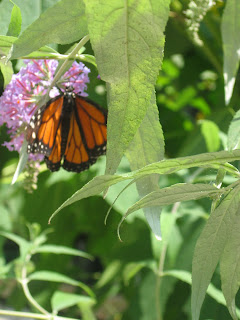 On one afternoon, we went to the Coastal Discovery Museum at Honey Horn. The house on the property showcases a history of the island, both natural and human, and included an exhibit of photography from around the Carolinas. The house sits along some salt marshes, and visitors can wander along a trail through the property that winds past some boardwalks overlooking the salt marsh, small gardens, some bee hives, an old barn, and even a native historical site that is being rebuilt. It was hot and muggy and totally made me miss North Carolina. We were there at low tide, and in the flat areas along the marsh, fiddler crabs scurried everywhere like roaches, the males waving their one giant claw to woo the ladies. We saw some herons wandering through the grasses and heard other birds chirping everywhere. A green anole scurried along a tree near us, and the butterfly garden was aflutter.
 The best part for me though was when my sister-in-law and I saw a bluebird fly onto a low branch nearby. Neither of us had seen a bluebird in person before, and even though I'm the nature nerd of the group, we were both equally awed. I am always wowed by nature, but there's something so special about seeing nature through the eyes of someone else, especially if they're not the type to get excited about things like that.
The next day, we went to the Pinckney Island National Wildlife Refuge. Again, hot and muggy, even early in the morning. We were hoping to see some gators, but no luck. We did see about a gajillion birds at Ibis Pond. I couldn't get any good close-ups because I realized after the fact that the super zoom on my camera only works when I turn on the digital display panel, which I don't use because it soaks up battery power. I brought my binoculars, and it seemed like my brother and sister-in-law really enjoyed getting to see the birds way up close through them. Unless they get into wildlife watching or hang out with me more often, they might not get to do that very often. I recognize that not everyone feels the need to experience nature as much as I do, but I hope that the experiences they had those two days made a difference to them. It gave me a new perspective on my volunteer work at the zoo as well, where most visitors will just walk through the exhibit without much afterthought, but a few might take away something meaningful from what they learned there.
Last weekend I hiked through Little Bennett Regional Park in Maryland, where I discovered some other new things, like the crayfish in the stream that eyed me and then scurried under a rock when I bent down to wash my hands after lunch. And the white-tailed deer that snorted and whined as it high-tailed it away from the trail I was walking on. And the giant red-headed woodpecker that startled me when I was too busy examining the map. I caught a quick glimpse as it flew by, but I didn't have enough time to see enough of the bird to identify it. Shortly afterward, I realized that the woods in that spot was particularly melodic and lamented the fact that I had spent too much time looking and not enough time listening to the sounds of the forest, so I sat on a bridge for ten minutes, just enjoying the sounds. Which unfortunately included road noise as well.
 On one afternoon, we went to the Coastal Discovery Museum at Honey Horn. The house on the property showcases a history of the island, both natural and human, and included an exhibit of photography from around the Carolinas. The house sits along some salt marshes, and visitors can wander along a trail through the property that winds past some boardwalks overlooking the salt marsh, small gardens, some bee hives, an old barn, and even a native historical site that is being rebuilt. It was hot and muggy and totally made me miss North Carolina. We were there at low tide, and in the flat areas along the marsh, fiddler crabs scurried everywhere like roaches, the males waving their one giant claw to woo the ladies. We saw some herons wandering through the grasses and heard other birds chirping everywhere. A green anole scurried along a tree near us, and the butterfly garden was aflutter.
 The best part for me though was when my sister-in-law and I saw a bluebird fly onto a low branch nearby. Neither of us had seen a bluebird in person before, and even though I'm the nature nerd of the group, we were both equally awed. I am always wowed by nature, but there's something so special about seeing nature through the eyes of someone else, especially if they're not the type to get excited about things like that.
 The next day, we went to the Pinckney Island National Wildlife Refuge. Again, hot and muggy, even early in the morning. We were hoping to see some gators, but no luck. We did see about a gajillion birds at Ibis Pond. I couldn't get any good close-ups because I realized after the fact that the super zoom on my camera only works when I turn on the digital display panel, which I don't use because it soaks up battery power. I brought my binoculars, and it seemed like my brother and sister-in-law really enjoyed getting to see the birds way up close through them. Unless they get into wildlife watching or hang out with me more often, they might not get to do that very often. I recognize that not everyone feels the need to experience nature as much as I do, but I hope that the experiences they had those two days made a difference to them. It gave me a new perspective on my volunteer work at the zoo as well, where most visitors will just walk through the exhibit without much afterthought, but a few might take away something meaningful from what they learned there.
Last weekend I hiked through Little Bennett Regional Park in Maryland, where I discovered some other new things, like the crayfish in the stream that eyed me and then scurried under a rock when I bent down to wash my hands after lunch. And the white-tailed deer that snorted and whined as it high-tailed it away from the trail I was walking on. And the giant red-headed woodpecker that startled me when I was too busy examining the map. I caught a quick glimpse as it flew by, but I didn't have enough time to see enough of the bird to identify it. Shortly afterward, I realized that the woods in that spot was particularly melodic and lamented the fact that I had spent too much time looking and not enough time listening to the sounds of the forest, so I sat on a bridge for ten minutes, just enjoying the sounds. Which unfortunately included road noise as well.
Subscribe to:
Posts (Atom)